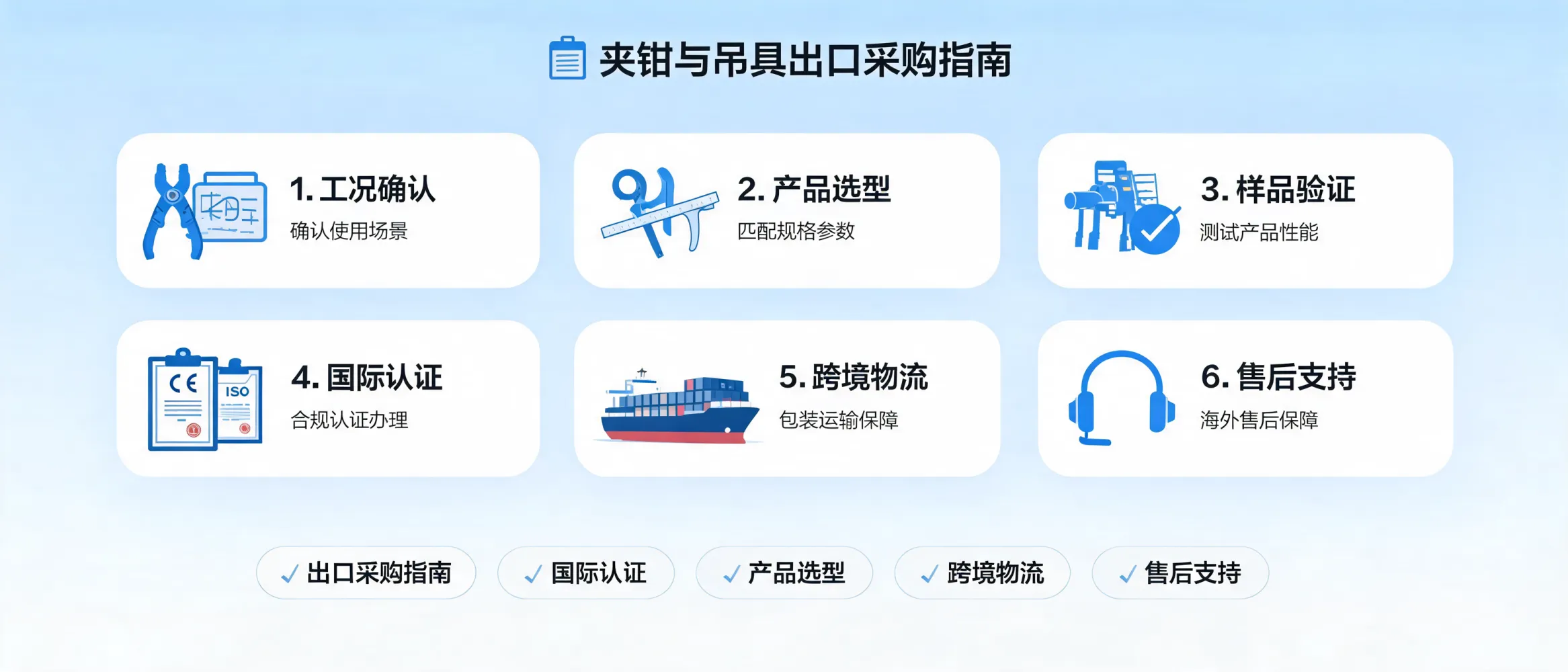
In B2B procurement, lifting clamps and lifting slings are often discussed first by load capacity. Capacity matters, but it is only one part of the selection process. The right choice also depends on workpiece shape, material, surface condition, lifting points, operating conditions, and applicable safety standards.
Changsha Jieding Lifting Machinery Co., Ltd. supports global buyers of lifting accessories with a practical selection perspective: choose equipment that matches the application, not just the tonnage label.
A lifting accessory may appear suitable on paper, yet still be unsuitable in actual use. Common procurement mistakes include:
| Selection factor | Why it matters | Typical procurement check |
|---|---|---|
| Load capacity | Establishes the basic lifting range. | Confirm the rated load against the actual lifting demand. |
| Workpiece shape | Affects grip method, contact area, and stability. | Check whether the load is flat, round, curved, or irregular. |
| Material type | Different materials require different gripping or lifting logic. | Identify whether the workpiece is steel plate, section steel, pipe, coil, or another material. |
| Operating conditions | Environment influences durability and safety performance. | Review site temperature, indoor/outdoor use, handling frequency, and handling method. |
| Lifting points and standards | Directly affects compatibility and safe installation. | Confirm lifting point design, usage instructions, and relevant safety requirements. |
We start with the workpiece and the operating scenario, because the real use case defines the right lifting accessory.
Load capacity is reviewed together with geometry, grip method, and lifting points to avoid one-dimensional selection.
For international trade and project use, we pay attention to certification and safety-related requirements that support procurement decisions.
As a B2B export company, we connect product selection with logistics and after-sales communication for smoother cross-border cooperation.
This approach is useful for buyers handling a wide range of lifting tasks, especially when the same tonnage may appear across different applications.
A reliable procurement decision is not only about choosing a higher number. It is about selecting a lifting clamp or lifting sling that fits the workpiece, the environment, and the safety expectations of the project.
For B2B buyers, this is the difference between a product that merely looks suitable and a solution that is genuinely aligned with the task. Changsha Jieding Lifting Machinery Co., Ltd. supports that distinction with a focused range of lifting clamps and lifting slings built for professional trade needs.