Spreader vs Clamp: Essential Guide for Lifting Equipment Selection
10 09,2026
Changsha Jieding Lifting Machinery Co., Ltd.
Concept Explanation
Changsha Jieding Lifting Machinery Co., Ltd. explains the differences between spreaders and clamps, covering applicable work conditions, load types, rated capacity and safety features to help overseas contractors, distributors and procurement teams choose the right lifting solution.
Spreader vs Clamp: Essential Guide for Lifting Equipment Selection
Selecting the right lifting accessory is critical for safe, efficient operations in ports, logistics yards and construction sites. This page contrasts container spreaders and lifting clamps, outlines key selection factors and highlights the container spreader developed by Changsha Jieding Lifting Machinery Co., Ltd., designed for international use and backed by ISO9001 processes and export experience.
Quick Comparison
Aspect
Container Spreader
Lifting Clamp
Typical use
Handling 20ft/40ft containers, quay and yard operations
Lifting plates, beams, blocks and irregular loads — depends on clamp type
Load interface
Twistlock or spreader twistlocks engage container corner castings
Mechanical grip or wedge action on load surfaces (surface condition matters)
Mobility & setup
Often telescopic for quick length change (20ft/40ft)
Usually single-piece, portable; requires manual positioning or crane-assisted rigging
Safety features
Integrated locks, position sensors and anti-rotation designs reduce disengagement risk
Safety depends on clamp design and inspection; correct selection for surface and load is essential
When to choose which?
Choose a container spreader for standardized container handling, high-frequency quay and yard work, and when quick switching between 20ft and 40ft containers is required.
Choose a lifting clamp when lifting individual steel plates, beams or irregular items where a direct mechanical grip is appropriate and container-specific interfaces are not present.
Key selection factors
Load geometry — standardized containers vs. plates, beams or irregular shapes determines interface choice.
Operation environment — port yard, ship-to-shore, logistics hub or construction site affect durability and required sensors/controls.
Rated capacity & safety margin — select equipment with appropriate rated load and proven locking or gripping systems; follow manufacturer load charts.
Connection method — spreaders use twistlocks/rotating locks; clamps use mechanical grips — confirm compatibility with crane hooks and auxiliary rigging.
Inspection & certification — require documentation (manufacturing records, ISO processes, test reports) for cross-border projects.
Practical tip
For mixed operations, standardize on modular spreaders or multi-type clamps and ensure clear procedures for daily checks, locking verification and personnel training.
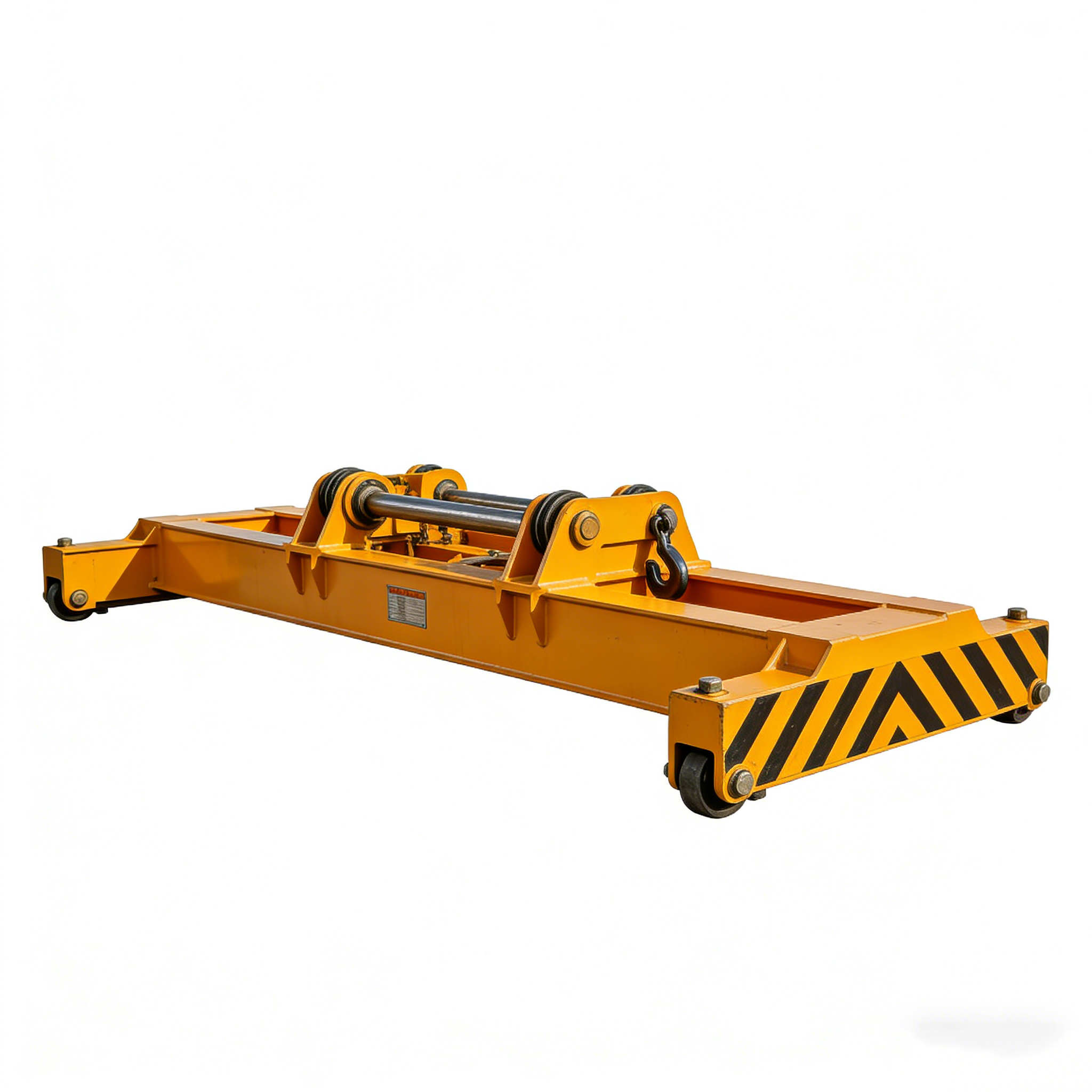
The container spreader developed by Changsha Jieding Lifting Machinery Co., Ltd. is engineered for port, logistics and construction lifting tasks with an emphasis on safety, efficiency and export readiness.
Automatic rotating lock + position sensing — ensures accurate engagement and reduces risk of accidental release.
Telescopic for 20ft / 40ft compatibility — rapid switching to shorten crane idle time.
Verify load types and frequency of lifts; choose spreader for containerized flows and clamps for discrete steel items.
Confirm rated capacities and suitable safety factors with supplier documentation.
Request product drawings, FEA summaries and test reports where available.
Plan for operator training, daily inspection routines and a spare-parts list to minimize downtime.
Check packaging, international shipping readiness and applicable export certifications for your destination.
Service & Certification
Changsha Jieding Lifting Machinery Co., Ltd. provides one-stop support across the procurement lifecycle — from product selection and specification, through installation and on-site training, to after-sales maintenance. Our ISO9001-aligned processes and international export experience ensure documentation and quality controls suitable for global projects.