How to Select Clamps and Lifting Tools for Overseas Engineering Projects
10 08,2026
Changsha Jieding Lifting Machinery Co., Ltd.
Industry Guide
Changsha Jieding provides a practical guide to selecting clamps and lifting tools for overseas engineering, manufacturing, warehousing, and logistics projects, covering load capacity, material form, lifting methods, operating conditions, equipment compatibility, and safety requirements.
How to Select Clamps and Lifting Tools for Overseas Engineering Projects
This practical guide helps procurement and engineering teams evaluate clamps and lifting tools for overseas engineering, manufacturing, warehousing and logistics projects. Changsha Jieding Lifting Machinery provides guidance on rated load capacity, product form and material, lifting methods, operating conditions, equipment compatibility and safety requirements to support risk‑conscious purchasing and on‑site use.
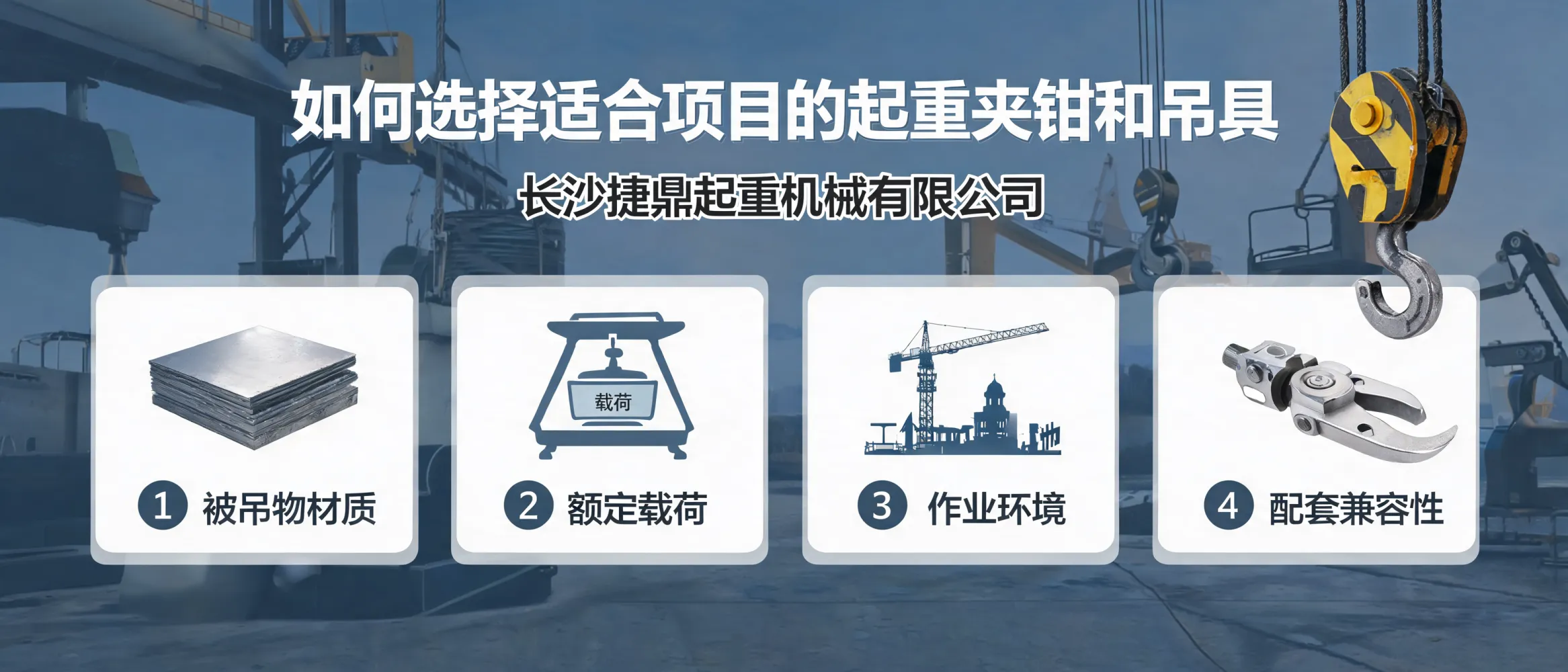
Key factors to consider before procurement
- Rated load and safety margin — define the maximum working load, lifting frequency and required safety factor. Specify any dynamic or off‑center loads that increase effective stresses.
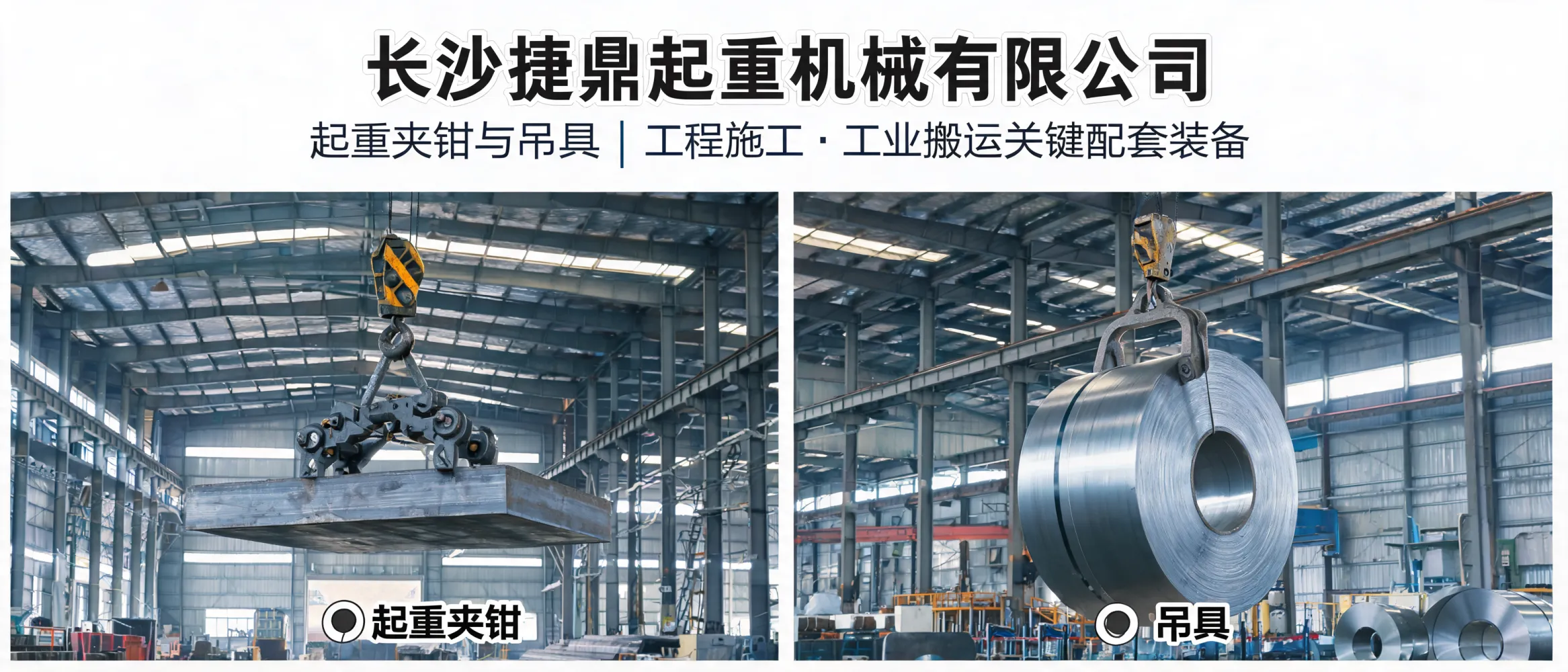
- Material form and geometry — plate, coil, beam, block or palletized goods require different clamp geometries and contact protections to avoid damage.
- Lifting method and rigging — determine single‑leg, multi‑leg, spreader beam or forklift attachment compatibility to select appropriate lifting points and interfaces.
- Operating environment — ambient temperature, humidity, corrosive atmospheres, dust, offshore or tropical conditions influence material selection and surface treatment.
- Equipment compatibility — verify hook throat size, shackle dimensions, crane block, spreader bar capacity and forklift carriage fittings for mechanical fit and safe operation.
- Safety, testing and documentation — require load tests, material certificates, traceable serial marking, and documentation that meets the importing country’s compliance rules.
Typical selection workflow (recommended)
- Define the lift — item weight, center of gravity, handling frequency and acceptable part orientation.
- Choose clamp type — match geometry and contact area to avoid part damage and ensure stable lifting.
- Verify capacity & connections — confirm rated capacity, proof load factor and mechanical interface with cranes/rigging.
- Specify materials & surface — corrosion resistance, hardness and coatings based on environment and contact forces.
- Require tests & documentation — proof load test reports, material certificates and mandatory marking for traceability.
- Plan logistics & packaging — sea/air freight packing, export documentation and spare parts availability for overseas projects.
Common clamp & lifting tool types and suitable uses
| Tool type |
Typical application |
Selection notes |
| Vertical plate clamp |
Lifting single plates and panels vertically |
Check plate thickness range, jaw protection and slip‑resistant surfaces. |
| Horizontal plate clamp |
Lifting and transporting plates horizontally |
Confirm anti‑tilt features and pad material for surface protection. |
| Coil clamp / coil lifter |
Handling steel/aluminum coils in manufacturing and shipping |
Match coil inner/outer diameter, ensure adequate contact area and balancing. |
| Beam & girder clamps |
Temporary lifting points on I‑beams and girders |
Verify flange thickness range and locking mechanism under dynamic loads. |
| Custom tongs / pallet lifters / spreader bars |
Special-shaped goods, pallets, containers or multiple‑point lifts |
Consider bespoke design to match load geometry and lifting plan. |
Material & surface treatment considerations
Select base material and surface finish based on load cycles and environment:
- Carbon / alloy steel — cost‑effective for general lifting; select appropriate heat treatment and hardness for wear resistance.
- Stainless steel — suitable for corrosive atmospheres or food/clean applications where corrosion resistance is critical.
- Surface coatings — galvanizing, painted coatings or specialized corrosion treatments extend life in marine or tropical environments.
- Contact pads & protection — rubber or polymer pads reduce part damage when lifting finished surfaces.
Compatibility with lifting equipment
Before placing an order, confirm mechanical interfaces and required accessories:
- Hook and shackle dimensions, required pin sizes and safe working loads.
- Spreader bar or crane block connection types and rated capacities.
- Forklift carriage adapters or pallet lifter brackets when using forklifts.
- Controls and actuation mode for powered clamps (manual, pneumatic, hydraulic, electric).
Safety, testing and documentation
Require documented evidence that products meet the intended use and regulatory requirements for the destination country:
- Proof load and acceptance test reports issued by the manufacturer or third‑party tester.
- Material certificates and batch traceability for critical components.
- Clear durable marking of rated capacity, serial number and manufacturer contact details.
- Operation & maintenance manual in the project language, and spare parts list for overseas support.
Procurement & delivery checklist (quick)
| Item |
Requested evidence / note |
| Rated capacity & proof test |
Proof load report and working load limit marked on the tool |
| Material & surface |
Material certificate and coating specifications for environment |
| Mechanical interfaces |
Shackle/hook dimensions, adapter drawings, and lifting plan compatibility |
| Packaging & export |
Sea/air packaging details, packing list, and export documentation |
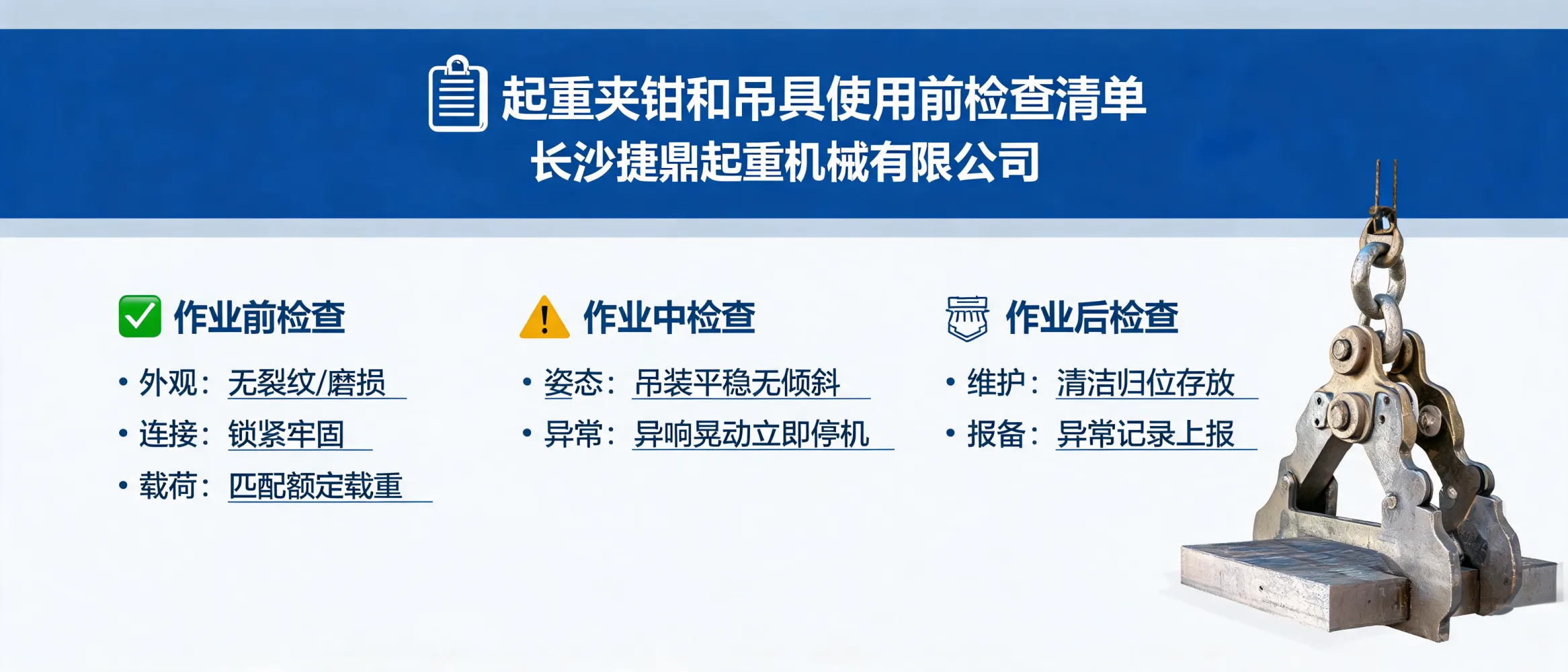
On‑site inspection & acceptance
At delivery and before first use, perform:
- Visual inspection for damage, correct markings and completeness.
- Verification of test reports against serial numbers.
- Functional test with a controlled proof load or test weight where safe and permitted.
- Confirm operator training and availability of maintenance spares.
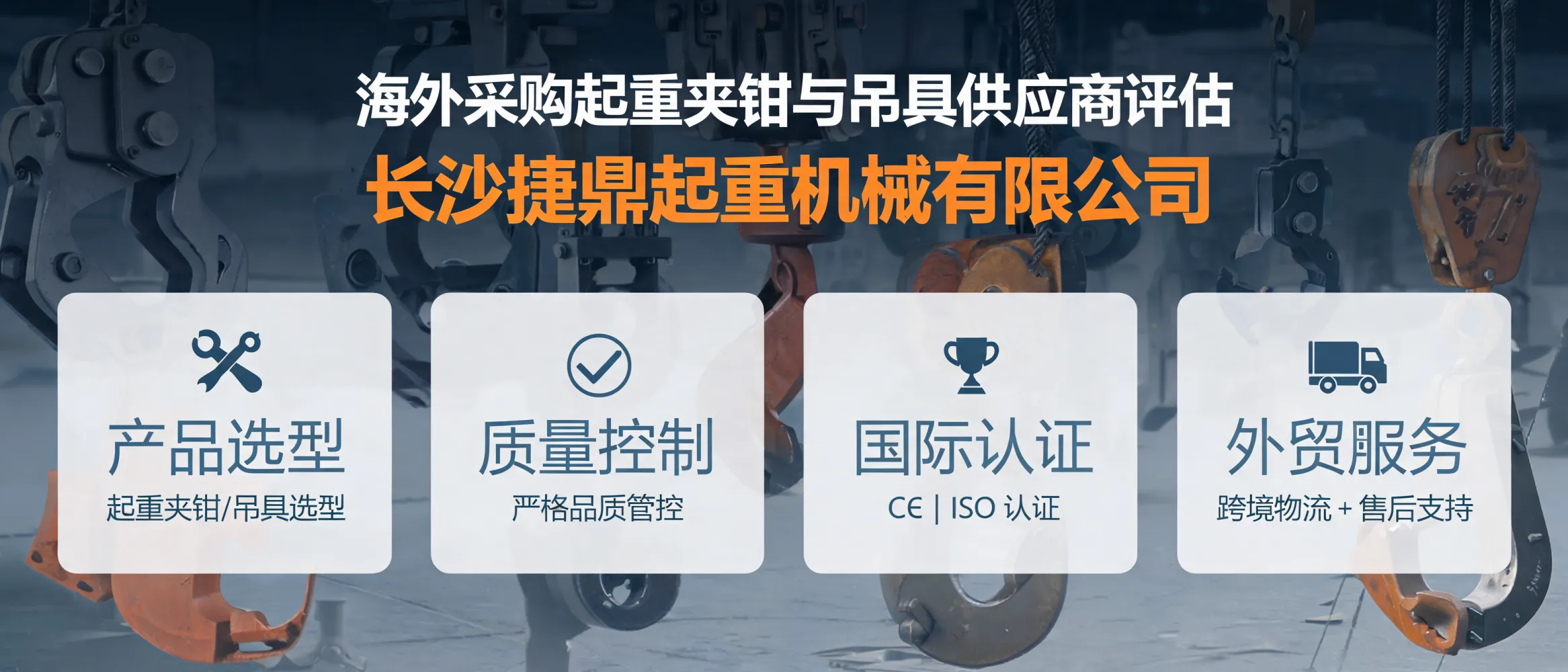
Why discuss selection with Changsha Jieding
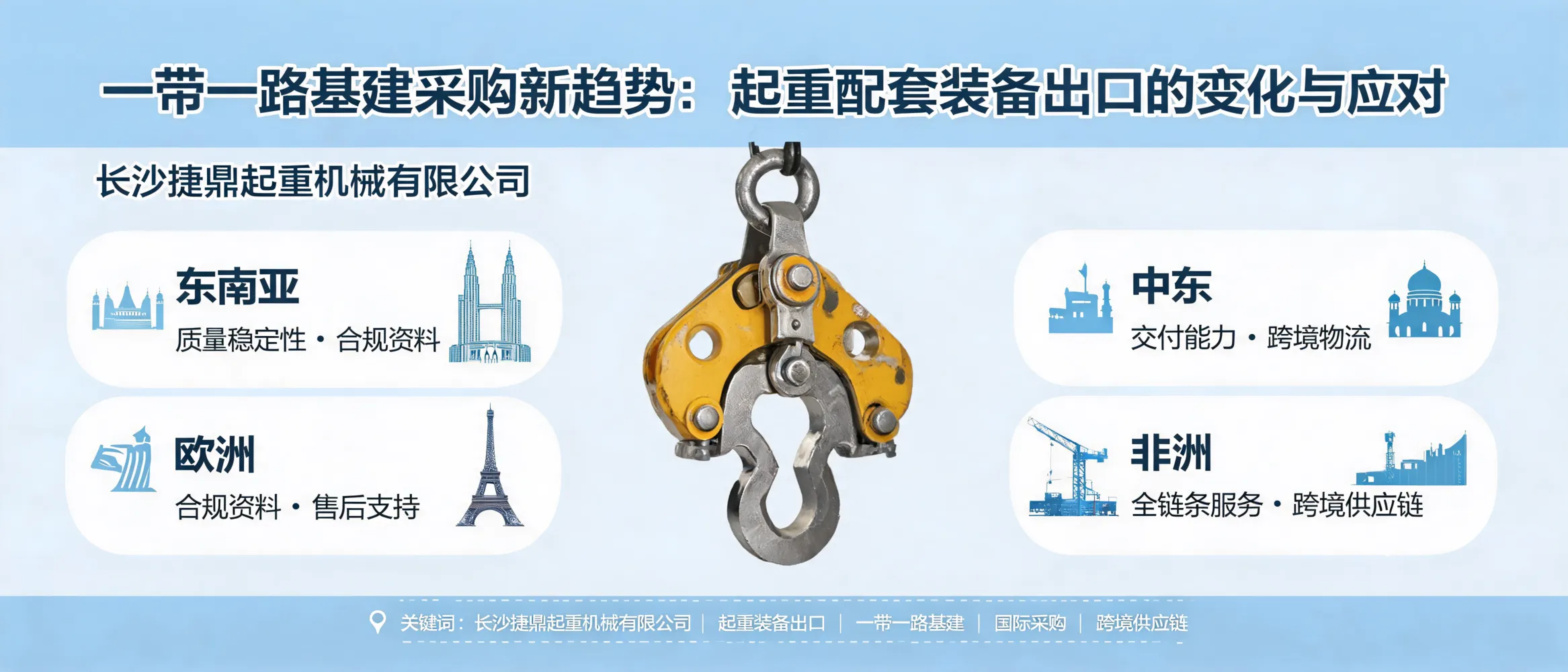
Changsha Jieding Lifting Machinery Co., Ltd. specializes in clamps and lifting accessories for global projects. Leveraging local engineering cluster advantages and established export processes, we support buyers with product selection, international documentation, logistics planning and after‑sales support to meet the needs of Belt & Road and other overseas engineering initiatives.
If you need a tailored selection review, supply of sample specifications, or export‑ready documentation for procurement, our technical team can evaluate your lifting scenario and recommend compliant clamp or lifting tool options.
For project‑specific support, request a selection consultation and provide: load data, part drawings or photos, intended lifting method and operating environment.