Practical guidance from Changsha Jieding Lifting Machinery Co., Ltd.
Safe operation of lifting clamps and rigging equipment depends on correct equipment selection, careful inspection, controlled handling, and compliance with the applicable product instructions. The following process provides a clear reference for B2B users, lifting teams, and site personnel. Operations should always be adapted to the actual workpiece, lifting environment, equipment specifications, and local safety requirements.
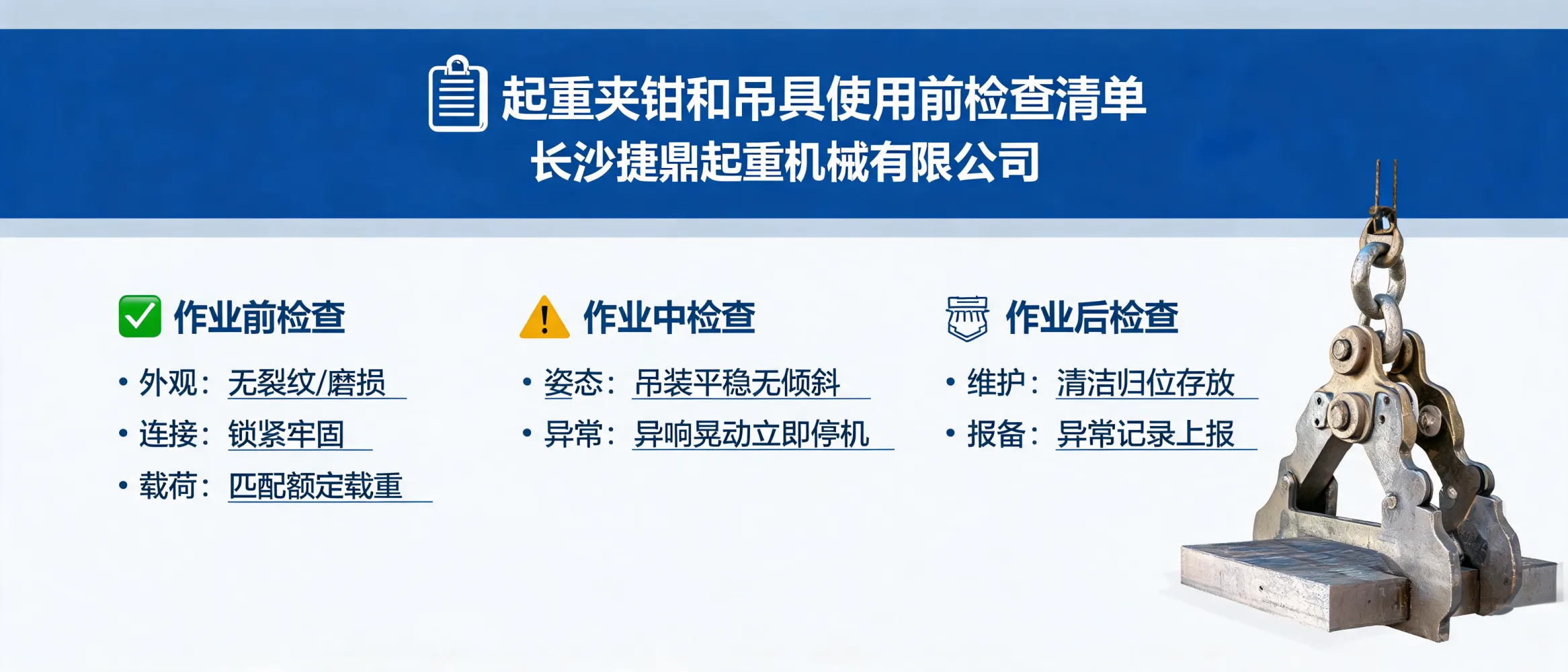
Before connecting a lifting clamp or rigging assembly, ensure that the planned operation is understood and that the selected equipment is suitable for the workpiece and working conditions. Do not begin lifting when any key information is unclear or when the equipment shows signs of damage.
Check the lifting clamp, shackles, slings, hooks, connectors, and other rigging components for visible cracks, deformation, excessive wear, corrosion, loose parts, or other abnormal conditions. Confirm that identification marks, rated capacity information, and safety components are readable and intact where provided.
Verify the workpiece type, weight, shape, dimensions, surface condition, center of gravity, and available lifting points. Confirm that the clamp and rigging arrangement match the intended lifting method and the workpiece’s actual characteristics.
Position the clamp as specified by the product instructions and ensure that the contact area is properly engaged. Connect the rigging components securely, keep the lifting path clear, and prevent personnel from standing beneath or unnecessarily close to a suspended load.
Raise the load a small distance in a controlled manner and pause to check whether the clamp remains properly engaged, the rigging is balanced, and the workpiece is stable. If slipping, tilting, unusual movement, or abnormal noise occurs, lower the load safely and reassess the setup.
Once the test lift confirms stable engagement, proceed at a controlled speed along the planned route. Avoid shock loading, sudden acceleration, side pulling, uncontrolled rotation, and contact with obstacles. Maintain clear communication between the operator and ground personnel.
Place the workpiece on a stable, prepared surface. Confirm that the load is fully supported before releasing tension or removing the clamp and rigging equipment. Keep hands and body parts away from pinch points during unloading and disconnection.
| Operation stage | What to verify |
|---|---|
| Pre-use inspection | Equipment condition, identification information, connectors, contact surfaces, and safety components |
| Workpiece confirmation | Weight, shape, dimensions, surface condition, center of gravity, and lifting points |
| Test lifting | Clamp engagement, balance, stability, clearance, and communication |
| Unloading | Stable support, controlled release, and protection from pinch points |
| Post-use care | Cleaning, condition review, suitable storage, and removal of damaged equipment |
The safe use of lifting clamps and rigging equipment must be based on the specific product instructions, rated capacity information, workpiece conditions, site procedures, and applicable regulations. Only suitably trained and authorized personnel should conduct lifting operations. When conditions change or equipment performance is uncertain, stop the operation and seek qualified technical assessment.
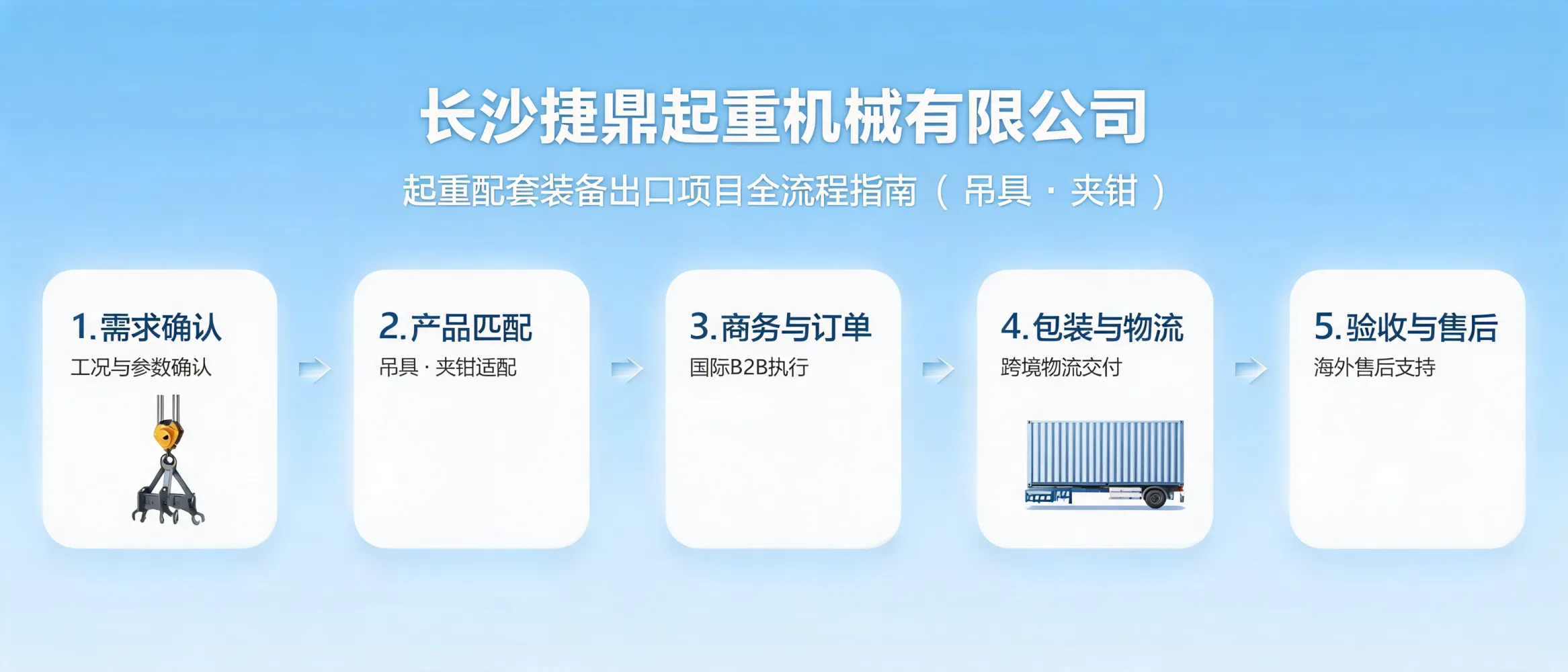
Changsha Jieding Lifting Machinery Co., Ltd. supports international B2B customers with lifting clamps, rigging-related equipment, product selection assistance, logistics coordination, and responsive service. For a suitable configuration, provide the workpiece information and intended operating conditions so the equipment can be evaluated against the actual application.