Pre-Use Checklist for Lifting Clamps and Rigging
24 07,2026
Changsha Jieding Lifting Machinery Co., Ltd.
Operating Instructions
Changsha Jieding Lifting Machinery Co., Ltd. presents a practical checklist for lifting clamps and rigging covering pre-use, in-use and post-use inspections: visual condition, connections, locking mechanisms, rated load matching, lifting posture and handling abnormal situations, plus supplier responsibilities for technical documentation, user guidance and after-sales support.
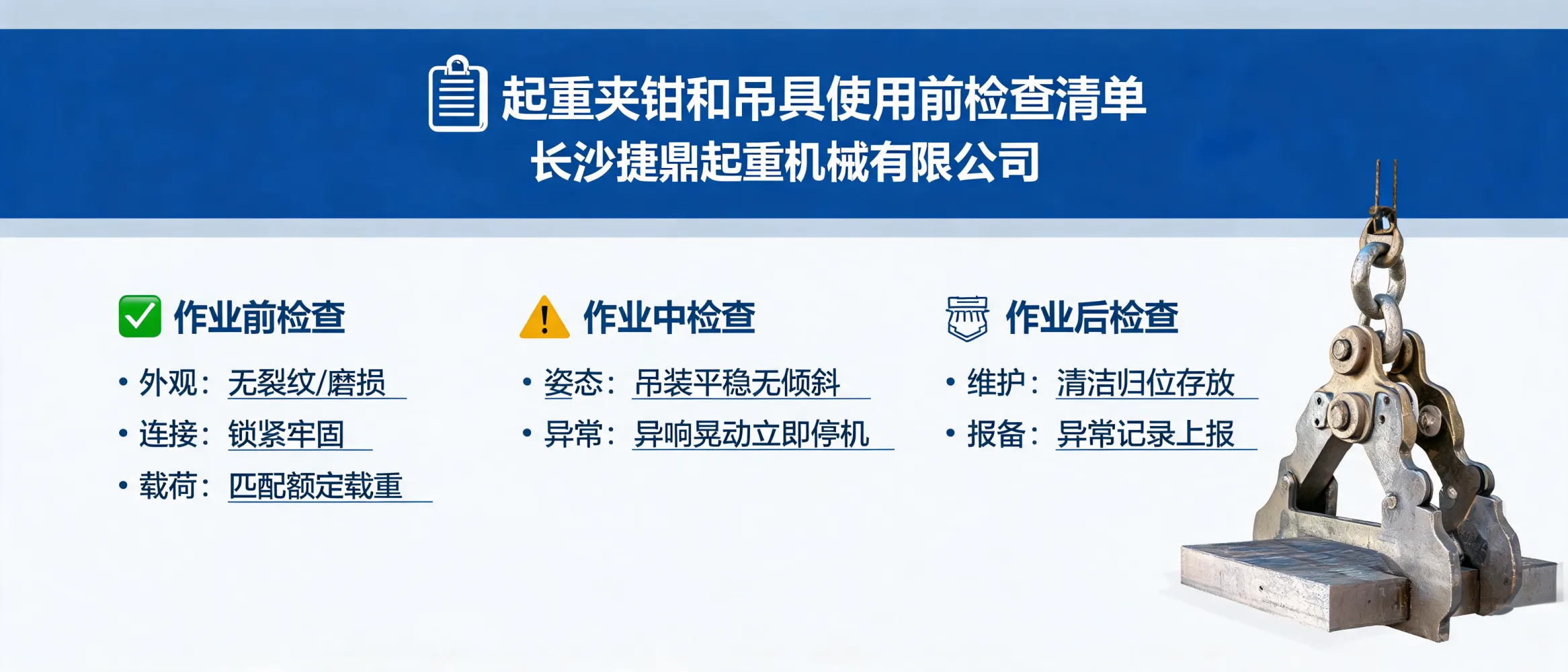
Pre-Use Checklist for Lifting Clamps and Rigging
Before any lifting operation begins, a clear inspection routine helps confirm that the lifting clamp, rigging components, and connection points are ready for use. A consistent pre-use checklist supports safer handling, better load control, and faster decision-making on site.
As a B2B supplier focused on lifting clamps and rigging solutions, Changsha Jieding Lifting Machinery Co., Ltd. provides products and service support for customers who need practical guidance, technical documentation, and reliable export-oriented supply. This checklist is designed to align with everyday warehouse, workshop, construction, and material-handling routines.
What to Check Before Use
A pre-use inspection should focus on visible condition, functional integrity, rated capacity, and the way the lifting setup will work with the load. The goal is to identify obvious issues early and prevent avoidable risk during operation.
1. Visual Condition
- Check the clamp body, lifting points, hooks, links, and accessories for deformation, wear, cracks, corrosion, or other visible damage.
- Confirm that moving parts operate smoothly and that no component appears loose, bent, or improperly assembled.
- Review the general condition of the rigging before each lift, especially when the equipment has been stored for a long period.
2. Connections and Locking Integrity
- Verify that pins, latches, safety locks, and connection points are properly engaged.
- Ensure the clamp or rigging assembly is secure and that no part can disengage during lifting.
- If the equipment uses a locking mechanism, confirm it opens and closes as intended.
3. Rated Load Matching
- Confirm that the lifting clamp and rigging capacity match the intended load.
- Review the weight of the load, the lifting point arrangement, and any dynamic factors that may affect operation.
- Never rely on visual estimation alone when the load must be verified against the rated load information.
4. Lifting Posture and Working Angle
- Check whether the lifting position is balanced and whether the load will remain stable throughout the move.
- Make sure the angle, direction, and contact area are suitable for the selected clamp or rigging method.
- Avoid forcing the equipment into a posture that is outside its intended working condition.
5. Abnormal Conditions
- Stop use immediately if abnormal noise, slippage, deformation, or unstable movement is detected.
- Do not continue lifting when the load position changes unexpectedly or when any connection becomes uncertain.
- Set the equipment aside for inspection and follow the site's maintenance or replacement procedure.
A Simple Workflow for Daily Use
For teams handling lifting clamps and rigging regularly, a consistent workflow makes inspections easier to repeat and easier to document. The following sequence can be adapted to different work environments and operating rules.
| Stage |
Focus |
Practical Check |
| Before use |
Condition and suitability |
Inspect appearance, connections, locking, and rated load matching. |
| In use |
Stability and control |
Monitor posture, movement, and any sign of abnormal shifting or slippage. |
| After use |
Condition review and storage |
Clean, store, and record any issue that may require maintenance or replacement. |
Why Supplier Support Matters
A dependable checklist is not only about the equipment on the ground. It also depends on the support provided by the supplier. For international B2B customers, technical clarity and responsive service are part of safe and efficient usage.
Technical Documentation
Clear product information, handling guidance, and usage references help customers make the right selection and apply the equipment correctly.
User Guidance
Practical instructions support safer inspection routines for teams that need to standardize daily lifting operations across different projects and sites.
After-Sales Support
When questions arise about product use, selection, or issue handling, responsive support helps customers maintain continuity in their lifting workflow.
Built for B2B Procurement and Cross-Border Projects
Changsha Jieding Lifting Machinery Co., Ltd. focuses on lifting-support equipment for global B2B customers, with an export-oriented service structure that covers product selection, international compliance coordination, logistics arrangement, and post-sale support.
For distributors, project contractors, and industrial buyers, the most valuable checklist is one that can be used consistently, understood quickly, and linked to real equipment conditions. That is the practical direction behind our lifting clamp and rigging guidance.
A reliable lifting operation starts with a careful pre-use check, continues with controlled handling, and ends with proper post-use review. When the equipment, the documentation, and the support all align, teams can work with greater confidence and consistency.