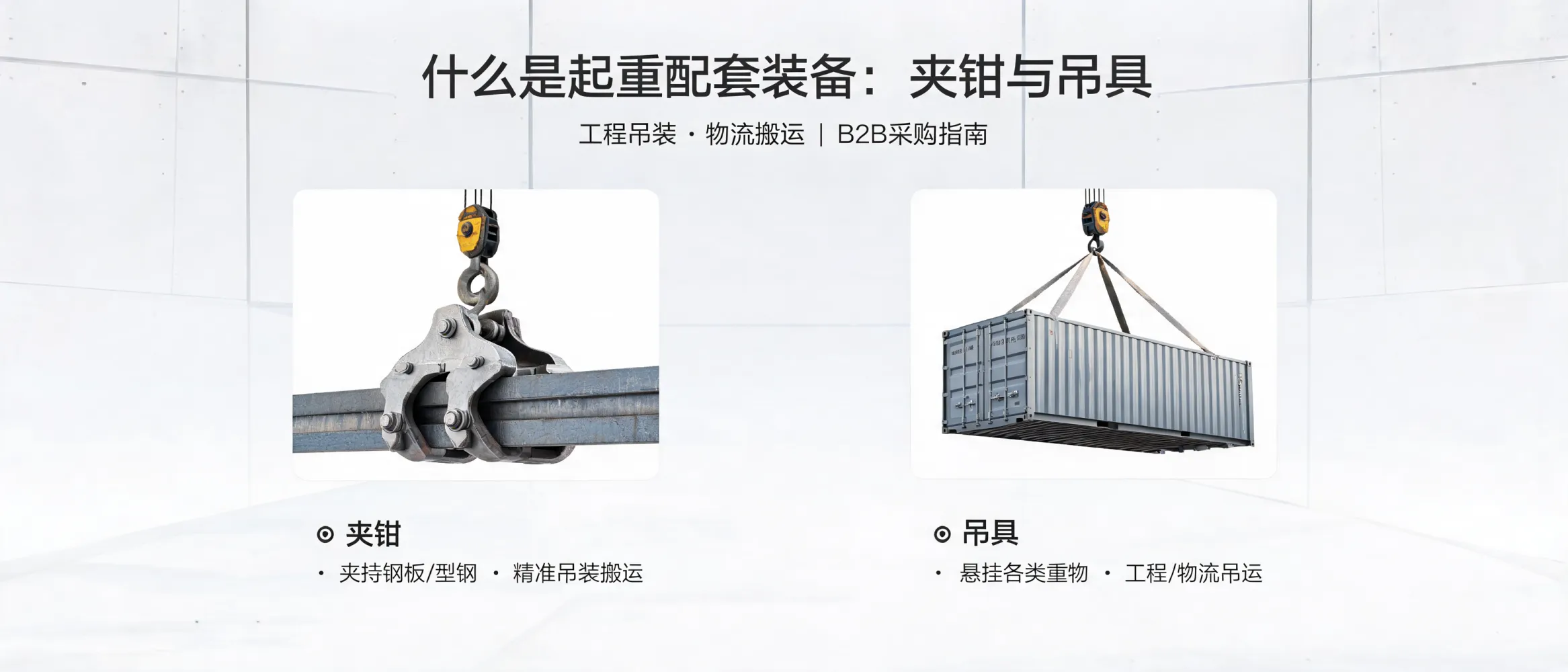
Selection Guide for Overseas Procurement of Lifting Slings, Clamps and Handling Equipment
12 07,2026
Changsha Jieding Lifting Machinery Co., Ltd.
Industry Guide
Changsha Jieding Lifting Machinery Co., Ltd. presents a practical guide for overseas buyers on selecting lifting slings, clamps and handling equipment. The guide covers operating-condition matching, load and safety parameters, material and corrosion requirements, international certifications, and logistics considerations to build an actionable procurement checklist.
Selection Guide for Overseas Procurement of Lifting Slings, Clamps and Handling Equipment
This practical guide helps overseas buyers assess and specify lifting slings, clamps and handling equipment for international projects. It summarizes key selection criteria—operating conditions, load and safety parameters, material and corrosion requirements, international certifications and logistics considerations—into an actionable procurement checklist you can use when sourcing from Changsha Jieding Lifting Machinery Co., Ltd. or other qualified suppliers.
1. Understand Operating Conditions
Before requesting quotes, document the site and operational environment. Accurate operating-condition matching reduces rework, ensures safety and saves cost in transport and installation.
- Temperature range (min / max) and exposure to UV or direct sunlight
- Indoor / outdoor use, presence of seawater spray, salt air or chemical vapors
- Frequency of lifts, cycle time, and typical duty profile (occasional / frequent / continuous)
- Handling geometry: single-point, multi-leg, angled lifts, confined space or deep foundations
2. Specify Load & Safety Parameters
Clear load definitions and required safety factors are central to correct sling and clamp selection.
- Rated load or working load limit (WLL) for each lift and for each leg in multi-leg assemblies
- Maximum load, including dynamic effects or impact factors (if applicable)
- Required safety factor or design factor based on project standards (e.g., local code, client specification)
- Allowable sling angles and effect on WLL (provide planned sling angles for multi-leg lifts)
Tip: Provide a simple sketch with dimensions and center-of-gravity location when requesting quotes—visual information speeds technical review and avoids under- or over-specification.
3. Material & Corrosion Resistance
Match material choices to environmental exposure and life-cycle expectations.
- Steel wire rope vs. synthetic slings: consider abrasion, heat exposure and chemical resistance
- Surface finishes for clamps and hardware: hot-dip galvanizing, electropolishing, or specialized coatings for marine or corrosive sites
- Stainless steel grades or duplex alloys when higher corrosion resistance is required
- Inspection access and replaceable wear parts for long-term maintenance
4. International Certifications & Documentation
Verify the certifications and documentation required by your jurisdiction, project owner or insurer.
- Common certificates: CE marking/EN standards, ISO 9001 quality records, and declarations of conformity
- Third-party load testing reports, material certificates (e.g., EN10204/3.1) and inspection reports on request
- Supply-chain documentation: packing list, commercial invoice, export certificates and MSDS if applicable
- For project tendering, request traceability information for critical components
5. Logistics & Packaging Considerations
Overseas procurement requires planning for packing, transport and customs clearance. Early alignment avoids delays and damage in transit.
- Packing standard: export wooden crates, steel frames or shrink-wrapped pallets depending on weight and corrosion risk
- Dimensions and weight per package for sea freight and container loading optimization
- Special handling instructions for oversized or heavy items (lifting points, center-of-gravity markings)
- Lead times, minimum order quantities and options for consolidated shipment
Quick Procurement Checklist
| Item |
Details to Provide |
| Operating conditions |
Temperature, indoor/outdoor, corrosive agents, duty cycle |
| Load data |
Max load, WLL per leg, sling angles, sketches |
| Material & finish |
Coating, stainless grade, anti-corrosion needs |
| Certifications |
Required standards, test reports, material certificates |
| Logistics |
Packaging, dimensions, lead time, customs documents |
Selection & Procurement Process (suggested)
- Prepare site and load brief; include sketches and photos where possible.
- Request technical offer with WLL, material spec, finish and certifications.
- Review vendor documentation and ask for clarifications or third-party tests if required.
- Confirm packaging, transport plan and incoterms before contract placement.
- Arrange pre-shipment inspection or witness test for critical items when necessary.
Supplier Checklist: Questions to Ask
- Can you supply material certificates and load-test reports on request?
- What inspection and quality control processes are in place for lifting accessories?
- What is the lead time for the specified configuration and packing options?
- Do you provide spare parts and maintenance guidance for long-term use?
Why Work with a Specialized Export Partner
Export-focused suppliers experienced in lifting equipment procurement—such as Changsha Jieding Lifting Machinery Co., Ltd.—can help align engineering selection with international documentation, optimize packing for sea freight and provide after-sales support across time zones. Their familiarity with regional standards and logistic routes reduces procurement risk for overseas buyers.
Next Steps
Compile your operating brief using the checklist above and share it with potential suppliers. For technical support or export-ready documentation, contact the export team at Changsha Jieding Lifting Machinery Co., Ltd. to request a tailored quotation and documentation package.