B2B Lifting Equipment Selection Guide
For overseas contractors, equipment distributors, port operators, logistics companies, and industrial buyers, the right lifting attachment depends on the load, handling method, operating environment, crane compatibility, and required safety controls. A lifting spreader and a lifting clamp are both used with lifting equipment, but they serve different handling purposes.
A lifting spreader is generally selected when the load has defined lifting points or standardized dimensions. It distributes lifting forces across the load and can support more controlled handling during repeated operations. A lifting clamp is typically selected when the load must be gripped directly by its surface or edge, subject to the clamp’s approved application and load requirements.
The choice should not be based on product name alone. Buyers should review the load type, connection method, working load limit, lifting angle, surface condition, crane or hoist interface, and operating procedures before placing an order.
| Selection factor | Lifting spreader | Lifting clamp |
|---|---|---|
| Primary handling method | Connects with designated lifting points or standardized load features. | Grips an approved load surface, edge, or structural section. |
| Typical application logic | Suitable for repeatable handling of loads with consistent dimensions or connection points. | Suitable when direct gripping is more practical than using fixed lifting points. |
| Key compatibility factors | Load dimensions, lifting points, crane interface, locking system, and container or load format. | Material thickness, surface condition, gripping range, load direction, and clamp design. |
| Main procurement focus | Structural strength, locking reliability, sensing or indication functions, and handling efficiency. | Grip security, correct application range, surface protection, and resistance to unintended release. |
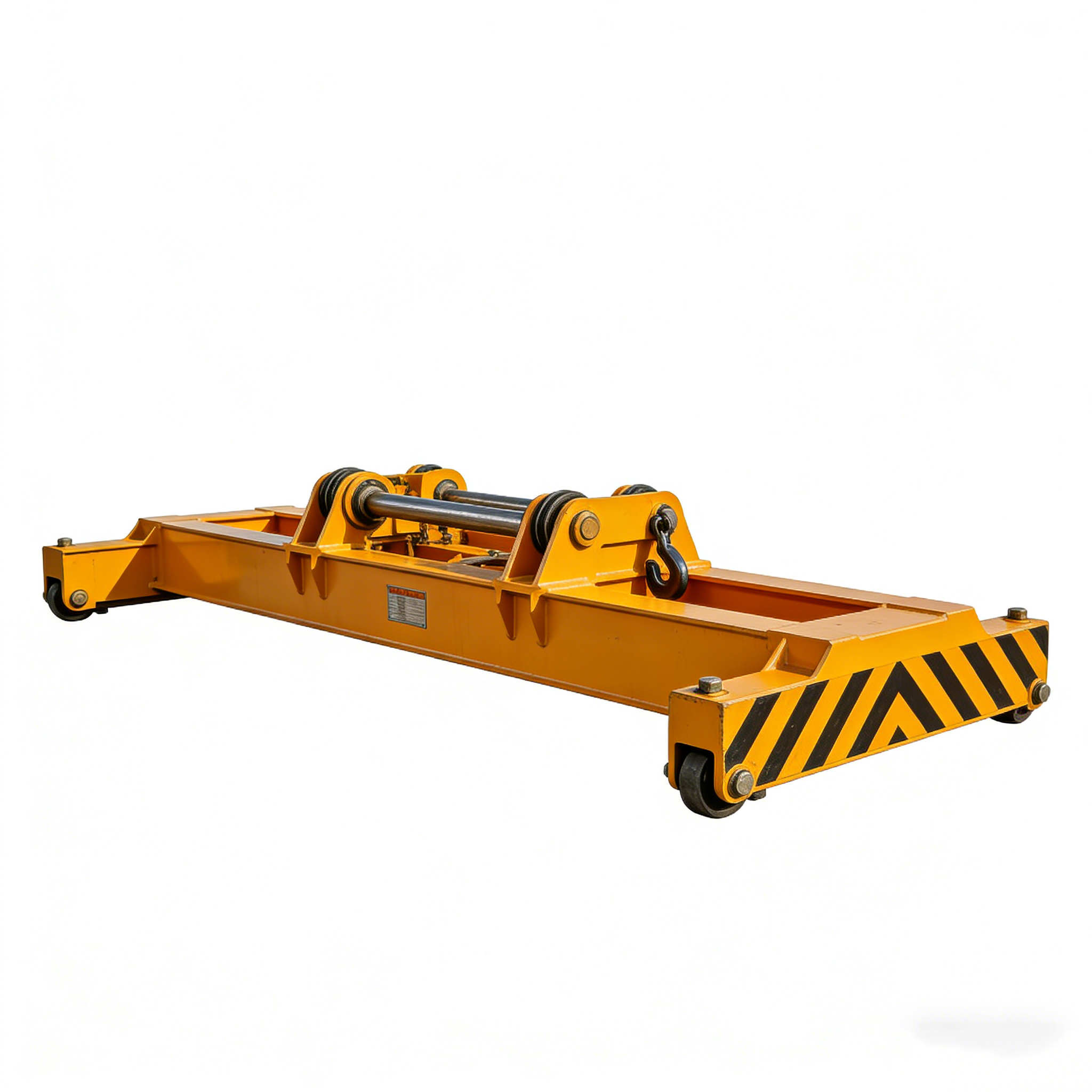
For container handling, a spreader is usually the more appropriate solution because it is designed around standardized container corner fittings rather than relying on surface friction or direct gripping. This makes the lifting method more repeatable for port operations, logistics parks, container yards, and construction sites that handle containerized loads.
The automatic rotating locking system is designed to engage the container connection points and help reduce the risk of release caused by incorrect operation.
Integrated position detection supports confirmation of the spreader’s locking status during lifting operations.
The telescopic structure enables fast switching between 20-foot and 40-foot containers, supporting efficient repetitive handling.
Finite element analysis is used to optimize the structural design, balancing lifting strength with a lighter construction for frequent heavy-duty operation.
Before selecting a spreader or clamp, procurement teams and operators should verify the following information with the equipment supplier:
Changsha Jieding Lifting Machinery Co., Ltd. is a professional B2B supplier focused on lifting accessories and supporting equipment for international markets. Its container spreader is developed for ports, logistics facilities, and construction sites that require controlled and repeatable container lifting.
The company operates with an ISO 9001-certified production process and supports customers through product selection, technical consultation, international trade coordination, installation guidance, operator training, and after-sales response. Its export experience covers Southeast Asia, the Middle East, Europe, and Africa.
For standardized container lifting, a spreader with reliable locking, position detection, 20-foot/40-foot adaptability, and optimized structural design can provide a more suitable handling solution than a direct-gripping clamp. For other loads, the final choice should be based on verified technical parameters and the actual operating conditions.