Lifting Slings vs Lifting Clamps: Functions, Applications and Selection Tips
11 08,2026
Changsha Jieding Lifting Machinery Co., Ltd.
Concept Explanation
Changsha Jieding Lifting Machinery provides a clear guide on lifting slings and lifting clamps, outlining their definitions, structural differences, typical applications and procurement considerations. This page helps overseas buyers assess safety factor, rated load, workpiece compatibility and operating environment to select compliant rigging solutions.
Lifting Slings vs Lifting Clamps — functions, applications and practical selection tips
This guide helps procurement managers and lifting engineers evaluate lifting slings and lifting clamps for safe, compliant rigging. Changsha Jieding Lifting Machinery Co., Ltd. draws on cross-border supply experience to outline definitions, core differences, typical use cases and a pragmatic buying checklist so you can match equipment to workpiece geometry, rated load and operating environment.
What they are — concise definitions
Lifting slings are flexible connectors (wire rope, synthetic webbing, chain or multi-leg assemblies) that wrap, cradle or loop around loads. They accommodate irregular shapes and distribute load across contact areas.
Lifting clamps are rigid gripping devices designed to mechanically hold specific workpieces (for example steel plates, beams or bars) by clamping, pinching or locking onto a defined surface or edge.
Key structural and functional differences
| Attribute |
Lifting slings |
Lifting clamps |
| Flexibility |
Flexible; conform to various shapes |
Rigid; designed for specific geometries |
| Typical load types |
Bundles, irregular masses, machinery, pipe |
Plates, sheets, beams, bars with definable edges |
| Contact behavior |
Distributed across surface or around load |
Point/edge contact with mechanical grip |
| Adjustment/positioning |
Easy to adjust sling legs and choker positions |
Requires correct alignment and seating for safe grip |
| Inspection focus |
Wear, abrasion, broken wires or cuts |
Jaw wear, locking mechanism, deformation, teeth |
Typical applications and scenario guidance
- Lifting slings: general cargo, machinery installation, bundled pipes, irregular shapes, multi-leg lifts and where load padding is needed.
- Suitable for operations demanding flexibility and load distribution.
- Lifting clamps: plate handling, steel fabrication, beam and bar lifts, where controlled grip and precise orientation are required.
- Prefer clamps when lifting edges or when slings could damage the workpiece.
Core selection criteria — what to assess
- Rated load and safety factor — specify the required working load limit (WLL) and confirm the safety factor for the intended operation.
- Workpiece geometry and surface — plate thickness, edge condition, coatings and surface finish affect whether slings or clamps are appropriate.
- Operating environment — temperature extremes, corrosive atmospheres or offshore exposure determine material and coating choices.
- Compatibility with lifting system — check attachment points, hooks, shackles and spreader bars for fit and rated capacity.
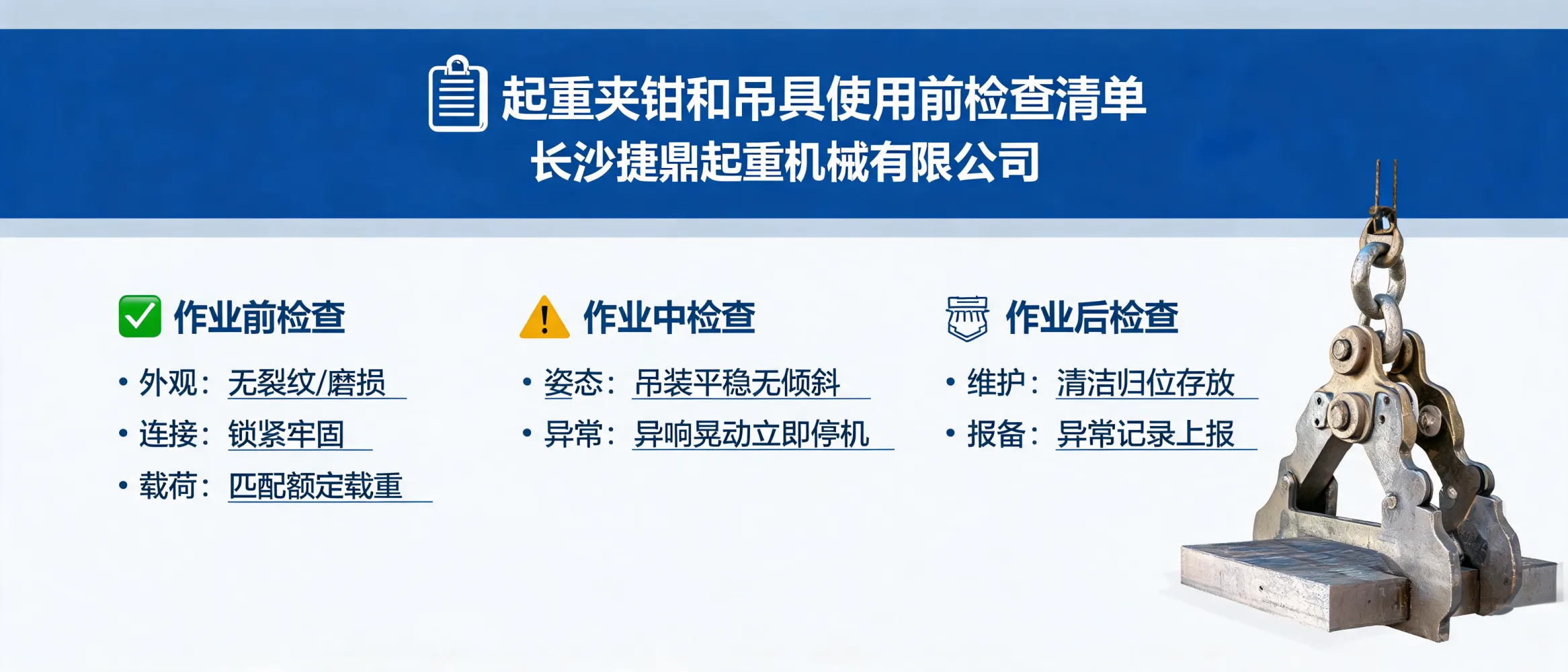
- Inspection & maintenance needs — consider accessibility for regular inspection and ease of replacement for wear parts.
- Certifications & documentation — request conformity certificates, test reports and traceable serial marking to meet project or local regulatory requirements.
Compliance, testing and documentation (what to request)
For cross-border projects and infrastructure tenders, ensure the supplier can provide verifiable documentation. Typical items to request include:
- Factory inspection and acceptance reports, material certificates and heat treatment records where applicable.
- Load test reports or proof-load test records and serial-numbered traceability.
- User manuals, maintenance schedules and recommended inspection intervals.
- Compliance declarations for applicable international standards — confirm with your project requirements which specific standards are required.
Changsha Jieding Lifting Machinery can assist with product selection and provide supporting export documentation as part of its full-chain trade service.
Practical procurement checklist (quick reference)
- Define the load, lift method and required WLL/safety factor.
- Confirm workpiece shape, edge condition and any protective coating.
- Specify environmental constraints (temperature, corrosion, offshore).
- List required certificates and on-site acceptance tests.
- Request inspection reports and part marking for traceability.
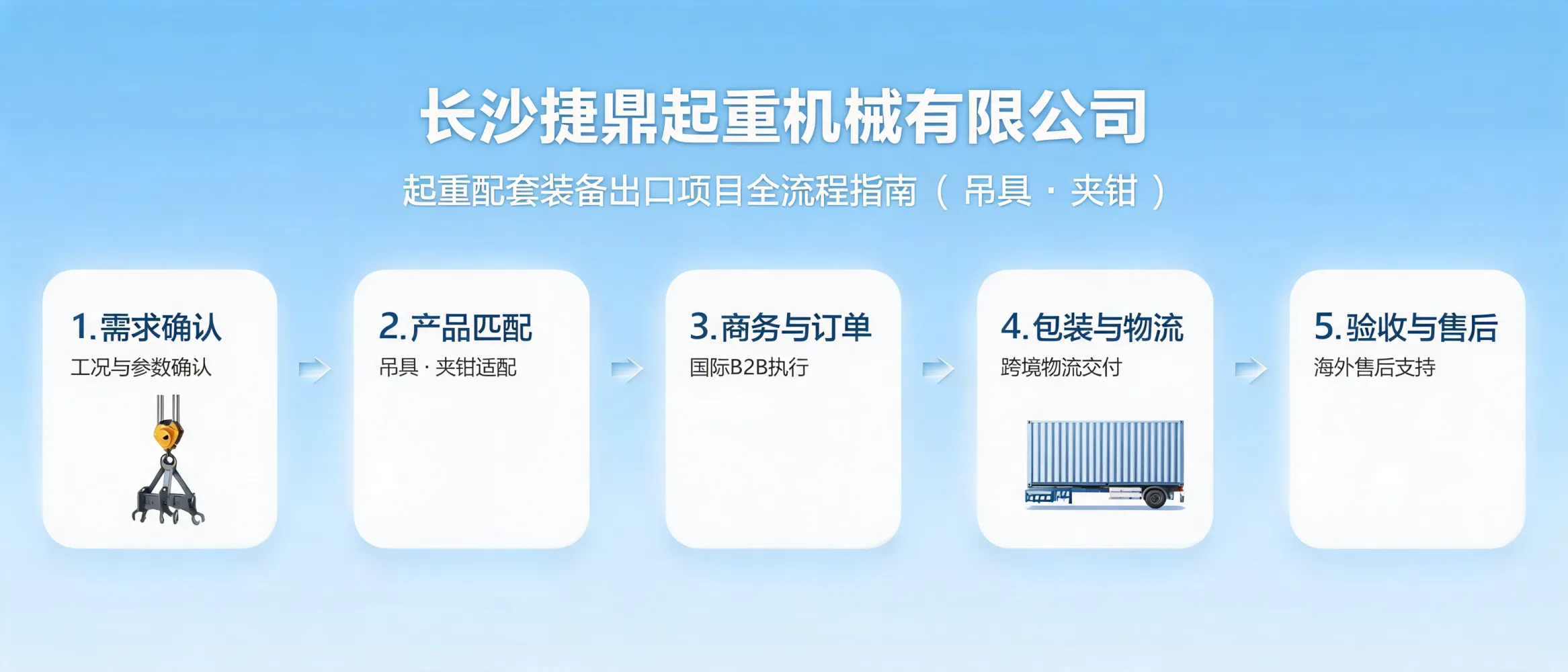
- Plan logistics, packaging and any on-site training or support needs.
A practical tip
Prioritize matching the rigging type to the load interface: when the load has a defined edge and repeatable lifting points, a clamp can increase handling precision; when geometry varies or cushioning is required, choose a sling with appropriate padding and protection.
Why work with Changsha Jieding Lifting Machinery
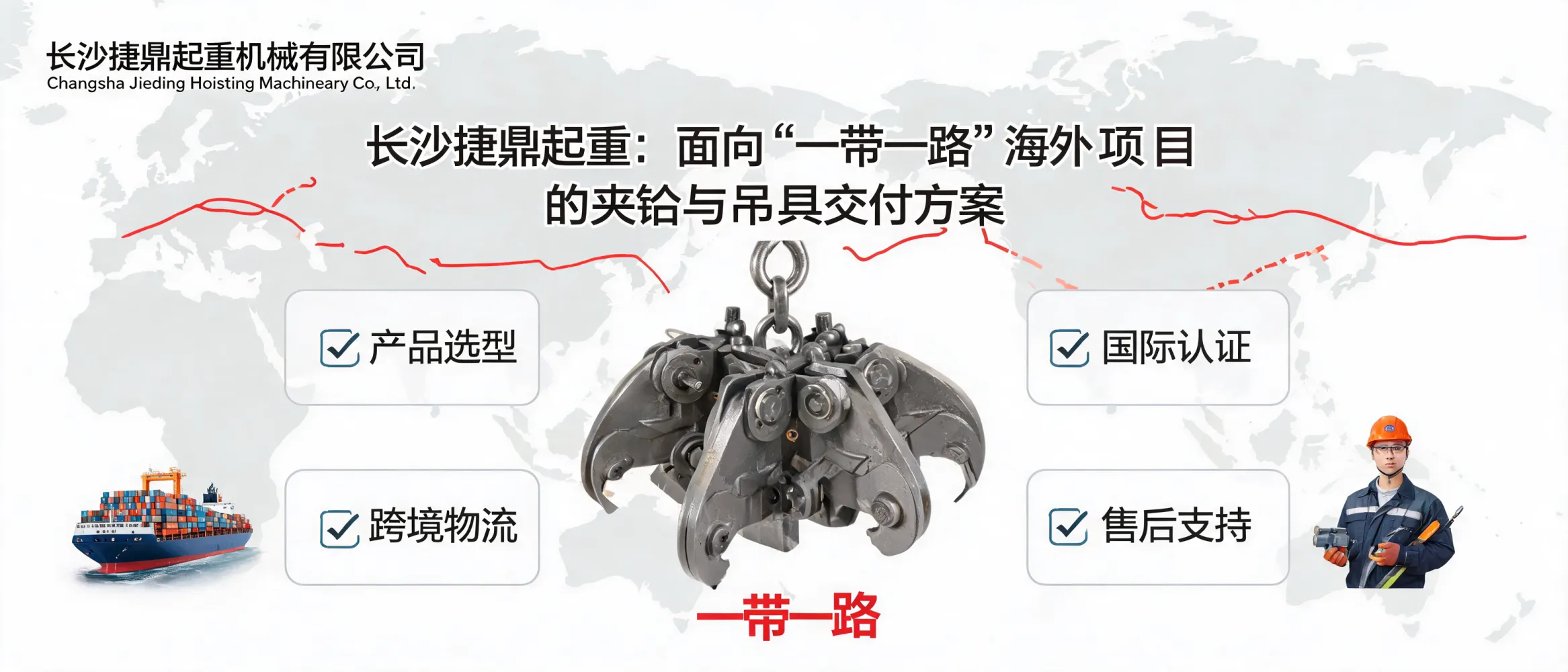
As a B2B exporter focused on lifting accessories, Changsha Jieding integrates product selection, international certification support, logistics and after-sales service. Our approach emphasizes compliance, traceability and practical fit-for-purpose recommendations for infrastructure projects and industrial handling applications.
We routinely serve customers across Southeast Asia, the Middle East, Europe and Africa and can adapt solutions to project specifications, shipping constraints and local inspection requirements.
Next steps — how to request a quote or technical review
To evaluate a lifting sling or clamp for your project, provide: load data and WLL requirements, part drawings or photos, lifting points and surface condition, and the expected operating environment. Changsha Jieding will respond with recommended types, certification options and a commercial offer.
For custom or repeat-lift applications, consider a short technical call or sample inspection to confirm fit and documentation before bulk procurement.
Note: This guide is informational and intended to support supplier selection and risk assessment. Always follow applicable local regulations and site lifting plans when selecting rigging equipment.