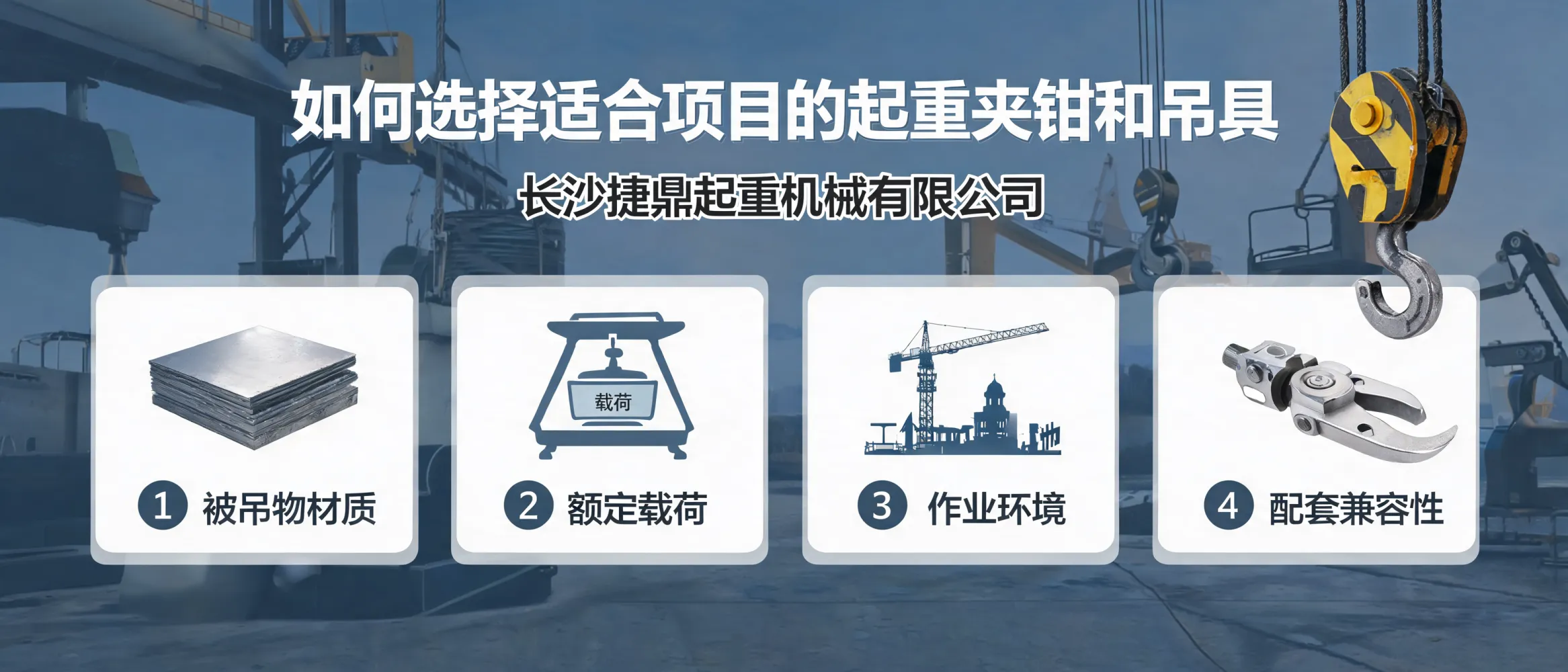
In B2B procurement, the terms lifting gear and clamps are sometimes used in the same purchasing discussion, yet they do not always refer to the same function, structure, or operating condition. For engineering, manufacturing, logistics, and international trade teams, clear product definition is essential before selection, quotation, certification review, and shipment planning.
Changsha Jieding Lifting Machinery Co., Ltd. focuses on lifting support equipment for global trade, including clamps and lifting gear solutions. Based on our export service experience, this page explains the practical differences between these product categories to support clearer communication with suppliers and more informed purchasing decisions.
In practical B2B usage, lifting gear is a broad term that usually refers to equipment and accessories used to support lifting, handling, securing, or moving loads. Depending on the project and the market, it may cover different product categories, such as lifting attachments, load-handling devices, and supporting accessories designed for specific operating tasks.
For buyers, the key point is that lifting gear is defined by its load-handling role, not by one fixed structure. Therefore, when a supplier receives an inquiry for lifting gear, the exact product scope should be clarified through load type, lifting method, working environment, and safety requirements.
Clamps are more specific. In lifting-related applications, clamps are mechanical devices used to grip, hold, or secure a workpiece or load during lifting, turning, transferring, or positioning. Their structure is usually designed around the shape, material, and surface condition of the item being handled.
Common clamp-based solutions are often chosen for plates, steel sections, packaged materials, or other items that require controlled grip and stable positioning. The actual working principle depends on the product design and the target load, which is why clamp selection should always match the application boundary.
| Comparison point | Lifting gear | Clamps |
|---|---|---|
| Definition scope | A broader category covering load-handling tools and accessories | A more specific gripping device for holding or securing loads |
| Main function | Support lifting, handling, moving, or connecting load-bearing tasks | Grip the load securely for lifting, transfer, rotation, or placement |
| Structural logic | Varies by product type and application scenario | Usually centered on clamping force, contact design, and grip stability |
| Selection focus | Compatibility, load capacity, operating environment, and standards | Load shape, surface condition, clamping method, and stability during use |
| Typical usage risk if misselected | Product may not match the handling process or certification need | Grip performance may be unsuitable for the workpiece or jobsite condition |
For buyers, the best approach is to start from the actual operating condition rather than the product name alone. A clear specification should answer the following questions:
Buyers often need lifting-related equipment that matches heavy-duty material handling conditions, project timelines, and cross-border logistics requirements. In this case, product definition and documentation are as important as the physical item itself.
Clamps are commonly considered when the workflow requires stable gripping, controlled movement, or positioning of specific workpieces. Matching the clamp design to the material and operation is essential for efficient use.
Overseas buyers usually need a supplier who can communicate clearly, handle export procedures, and coordinate delivery smoothly. For these projects, the product decision should be supported by practical selection guidance and responsive service.
As a professional foreign trade company focused on lifting support equipment, Changsha Jieding Lifting Machinery Co., Ltd. provides export-oriented service around product selection, international compliance, logistics coordination, and after-sales communication.
Our service approach is built around the practical needs of overseas procurement teams:
For B2B buyers, the most reliable selection method is to define the load, the operating process, and the destination requirements first. Once those three points are clear, it becomes much easier to distinguish between lifting gear and clamps, compare supplier proposals, and choose a product that fits the real job.
If your project requires lifting-related equipment for overseas supply, a precise technical discussion at the beginning can save time later in quotation, production coordination, and delivery planning.