

Engineering Project Procurement Guide
Selecting lifting equipment for an international engineering project requires more than matching a product name to a load. Overseas buyers, engineering contractors, and equipment distributors should evaluate the lifting requirement, handling scenario, operating environment, equipment compatibility, compliance, delivery conditions, and after-sales support together. This approach helps reduce specification errors and cross-border procurement risks.
The correct equipment depends on what is being lifted, how it is handled, and how often the operation will be repeated. Before requesting a quotation, prepare the basic operating information and confirm whether the equipment will be used with a crane, spreader beam, lifting system, or another handling machine.
Confirm the load type, weight range, dimensions, center of gravity, lifting points, and required working load capacity.
Identify whether the equipment is intended for port handling, logistics yards, construction sites, or other engineering operations.
High-frequency and heavy-duty applications require careful attention to structural strength, operating stability, inspection, and maintenance.
Different lifting products solve different handling problems. Lifting clamps are generally selected according to the material, shape, gripping position, and lifting direction of the load. Slings and related lifting accessories require evaluation of the load path, connection method, working load, and site conditions. A container spreader is selected according to container dimensions, crane interface, locking method, and the required handling process.
| Selection factor | Questions to confirm | Why it matters |
|---|---|---|
| Load and dimensions | What is the maximum load, size, and lifting point arrangement? | Supports an appropriate capacity and connection design. |
| Equipment compatibility | Can the lifting equipment interface correctly with the crane or handling system? | Reduces installation, operation, and coordination problems. |
| Site conditions | Will the equipment operate indoors, outdoors, at a port, or on a construction site? | Helps align the selection with environmental and operational requirements. |
| Compliance and documentation | What quality, inspection, certification, and import documents are required? | Improves procurement transparency and supports project compliance review. |
For container handling, the spreader must correspond to the container sizes and the operating method used by the project. A suitable specification should be reviewed against the following points:
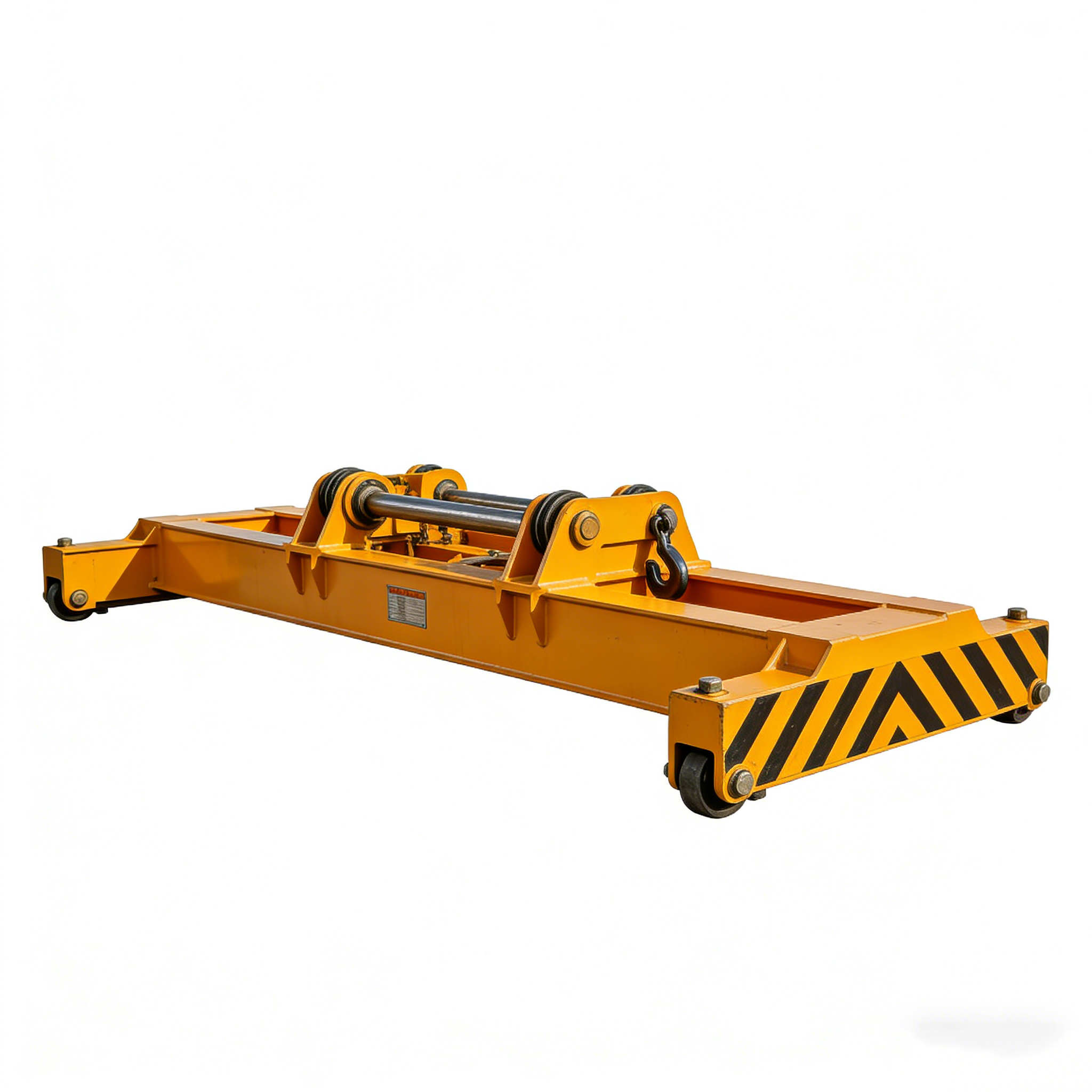
Changsha Jieding Lifting Machinery’s container spreader is designed for port operations, logistics parks, and construction sites. Its product configuration provides a practical reference for buyers comparing container lifting equipment for international engineering projects.
A product that appears suitable by capacity may still be unsuitable if the interface, dimensions, control method, or site workflow is not aligned. Engineering buyers should exchange the relevant technical information before finalizing the order.
For overseas engineering projects, equipment selection is only one part of the purchasing decision. Buyers should also evaluate product documentation, international trade coordination, packaging, logistics delivery, installation guidance, and response arrangements after shipment. Changsha Jieding Lifting Machinery Co., Ltd. supports customers with product selection, international certification coordination, logistics delivery, installation training, and after-sales service. The company serves customers in Southeast Asia, the Middle East, Europe, and Africa through an integrated B2B export service process.
Procurement principle: select lifting equipment by considering load, application, compatibility, operating conditions, compliance, delivery, and service as one complete project requirement—not as isolated product specifications.


