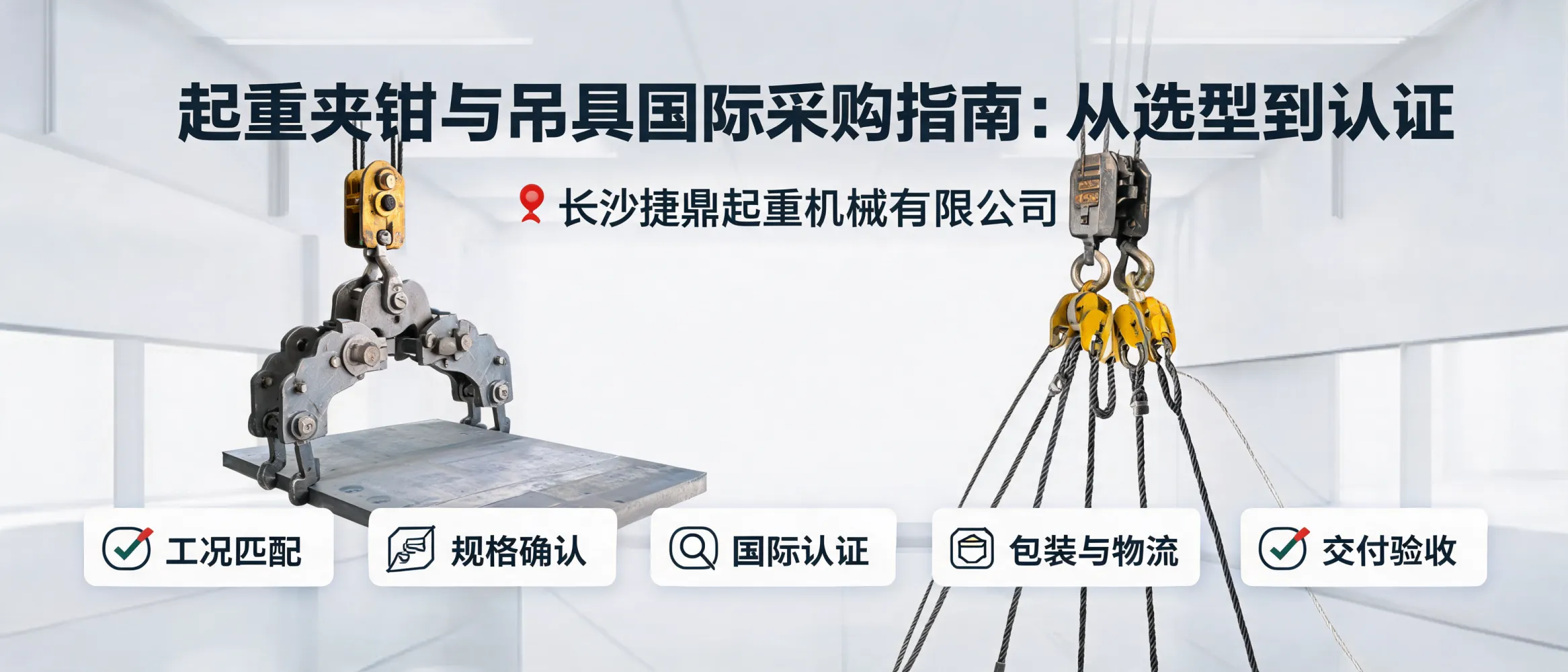
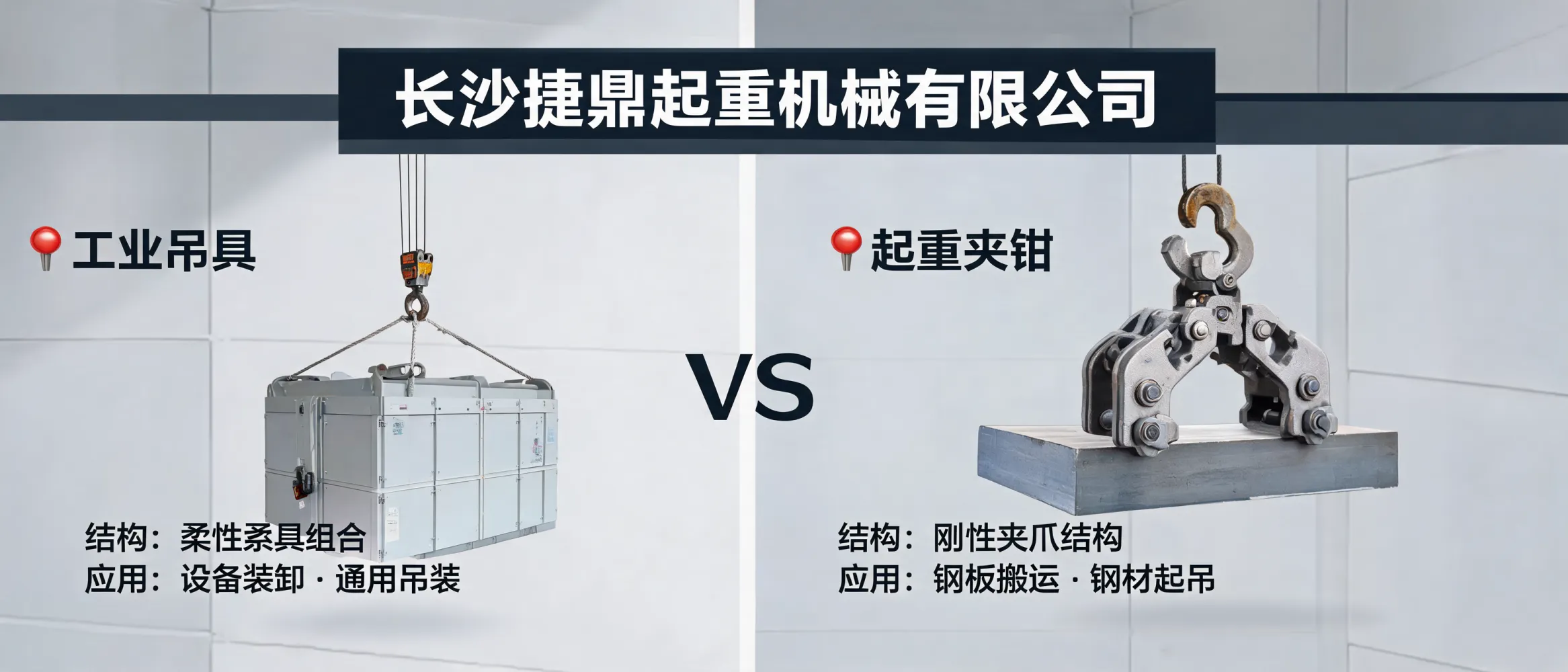
Lifting clamps and lifting rigging are both used in material handling, but they perform different roles. A lifting clamp generally grips or connects directly to a load, while lifting rigging refers to the wider group of components used to attach, suspend, control and position that load. Understanding this distinction helps overseas B2B buyers assess equipment requirements more accurately for steel handling, construction, ports and industrial production.
In a typical lifting operation, the load, the attachment point and the lifting machine must work as one coordinated system. A lifting clamp is designed to engage with a specific part of the load, such as a plate, beam or other suitable material profile. Lifting rigging is a broader term covering the equipment and assemblies that connect the load to a crane, hoist or other lifting device.
The right choice depends on the load configuration and the intended lifting method. A clamp may be used as the direct gripping point, while slings, shackles, hooks or related accessories may form part of the connection between the clamp, the load and the lifting machine.
| Comparison point | Lifting clamps | Lifting rigging |
|---|---|---|
| Primary role | Grip, hold or attach to a suitable part of the load. | Connect, suspend, distribute or control the load during lifting. |
| Typical load interface | A defined load edge, plate, beam or compatible surface. | Lifting points, shackles, hooks, slings or other connection points. |
| Load-bearing method | Mechanical gripping or clamping action, according to the equipment design. | Tension, suspension and connection through one or more rigging components. |
| Selection focus | Load shape, material condition, gripping position, capacity and operating orientation. | Component capacity, connection method, sling arrangement, lifting angle and system compatibility. |
Clamps can be considered for handling compatible steel plates, sections or fabricated components. Rigging assemblies may be used to connect loads to cranes and support controlled movement.
Construction lifting often involves irregular work schedules, changing load shapes and different attachment points. Equipment selection should match the planned lifting configuration and site conditions.
Material handling in ports and logistics environments requires clear connection methods, suitable rated capacity and efficient coordination between lifting equipment and the load.
In workshops and production areas, clamps and rigging may support the transfer, positioning or assembly of materials when the selected equipment is compatible with the task.
Product selection should begin with the actual lifting task rather than with a general product name. Buyers can use the following factors to define the required configuration:
Provide the load type, dimensions, weight, lifting points and surface information.
Explain the lifting direction, frequency, work environment and supporting crane or hoist.
Compare capacity, attachment method, dimensions and documentation requirements.
Align product details, inspection documents, packaging, delivery and after-sales support before ordering.
Changsha Jieding Lifting Machinery Co., Ltd. focuses on the international trade and service of lifting accessories, including lifting clamps and related lifting equipment. As a B2B supplier serving overseas buyers, the company supports procurement communication across product selection, international certification coordination, logistics delivery and after-sales service.
For buyers comparing lifting clamps, lifting rigging and material-handling solutions, a clear technical brief helps establish a more suitable product direction. Capacity, load shape, attachment method, operating orientation and destination-market compliance should be confirmed before the final equipment configuration is selected.
The most appropriate lifting solution is determined by the complete lifting task—not by the clamp or rigging component alone. Always verify the equipment instructions, rated capacity, connection arrangement and applicable safety requirements before use.