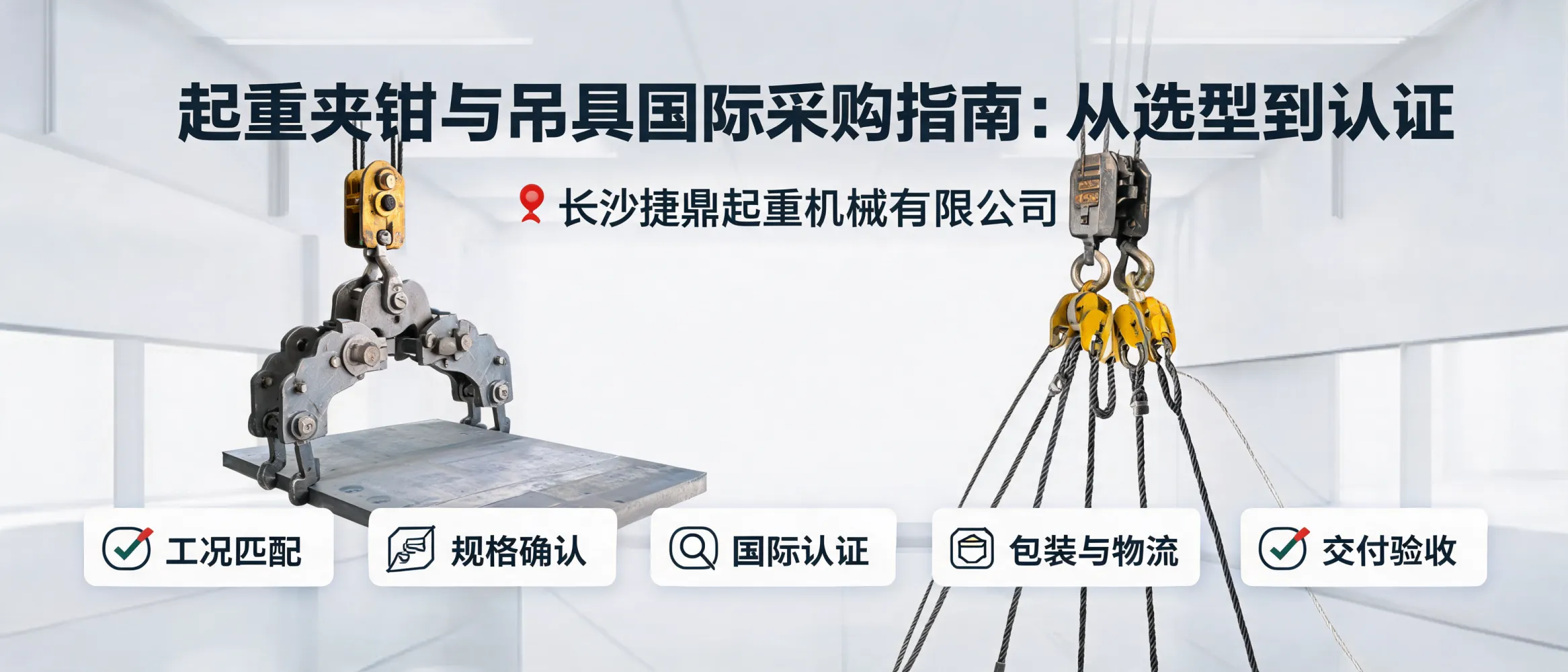
Lifting Clamps and Slings Procurement Selection Guide
21 08,2026
Changsha Jieding Lifting Machinery Co., Ltd.
Industry Guide
Changsha Jieding Lifting Machinery provides a practical guide to selecting lifting clamps and slings, covering load capacity, load characteristics, operating conditions, equipment compatibility, and safety factors for B2B procurement.
Lifting Clamps and Slings Procurement Selection Guide
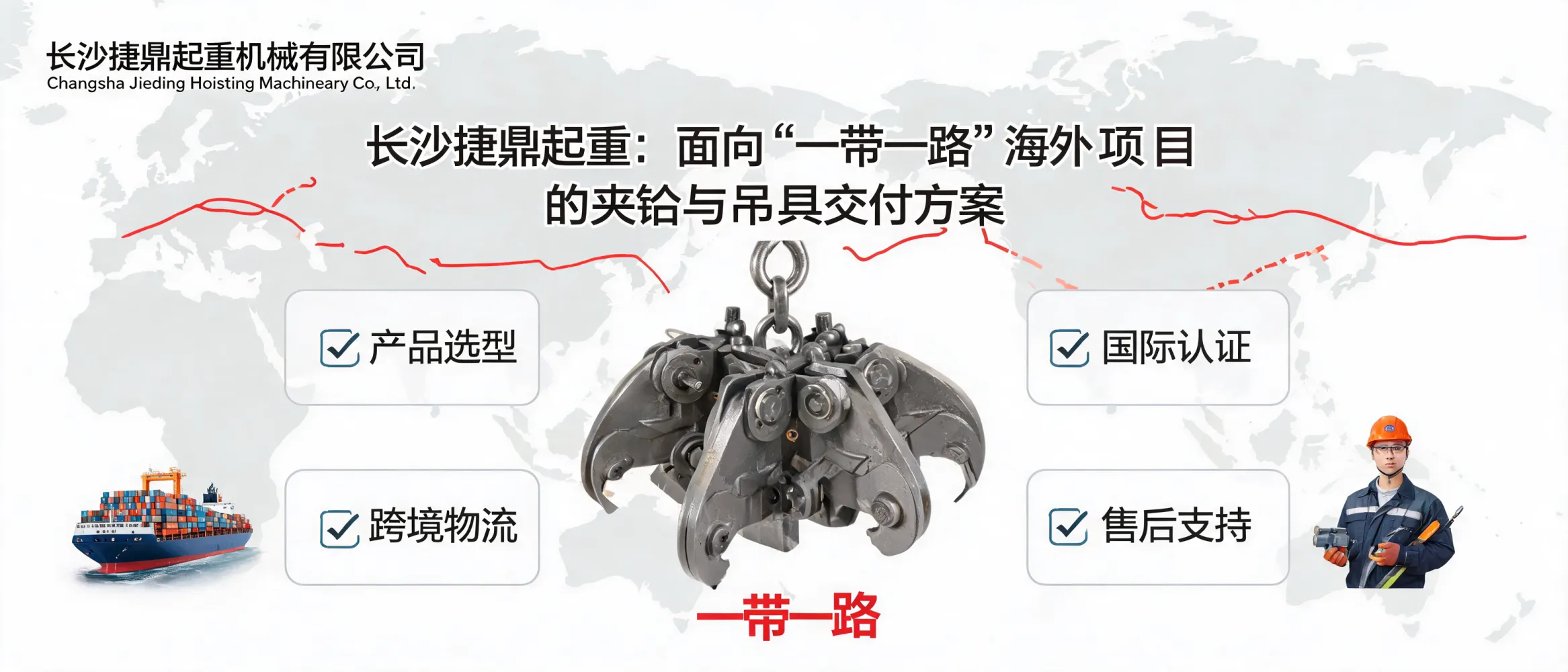
This guide helps international B2B buyers evaluate and specify lifting clamps and slings for safe, cost‑effective procurement. Changsha Jieding Lifting Machinery Co., Ltd. supports selection by combining product expertise with export services — including international certification support, logistics coordination, and after‑sales service — to reduce the risk of overload, incorrect specifications, and incompatibility after delivery.
Key selection criteria
Rated load (Working Load Limit) — Specify the maximum intended working load and any expected peak or dynamic loads. Always supply the supplier with the design lifting load and the maximum foreseeable transient loads so the product can be selected with appropriate capacity and certification.
Load size, shape and material — Provide drawings, weight distribution, center of gravity location, surface condition (rough/smooth, painted, oily), and base material (steel, concrete, composite). These factors determine clamp jaw design, sling contact area, and padding/protection needs.
Lifting method and connection points — Clarify whether lifts are vertical, horizontal, multi‑point, rotating, or tandem. Note available lifting points on the load and the intended crane/hook or spreader beam interface to verify compatibility.
Operating frequency and duty cycle — Indicate typical number of lifts per day and expected lifecycle. High‑frequency or continuous operation affects material selection and inspection intervals.
Environmental and temperature conditions — State ambient and load temperatures, humidity, and exposure to chemicals or abrasive environments. Corrosive or high/low temperature conditions require specific materials or protective coatings.
Equipment compatibility — List the lifting equipment type (overhead crane, gantry, truck crane, hoist) and any attachment limitations (hook throat size, shackles, swivel requirements) so fit and safe operation are ensured.
Standards, certifications and traceability — Specify required compliance (national or international standards, inspection reports, material certificates). Also request marking and traceability provisions for installed components.
What to provide to your supplier
Providing complete working‑condition information enables accurate specification and reduces risk. At minimum, share:
Load data: weight, drawings, center of gravity, contact points.
Use profile: lifting method, frequency, typical lifting procedures.
Environment: temperature range, humidity, corrosion/chemical exposure.
Equipment interfaces: crane hook size, spreader beams, shackles or special fittings.
Compliance requests: required certificates, test reports, marking and packing requirements.
Delivery & service preferences: delivery timeline, inspection acceptance, spare parts and maintenance support.
Clamp vs Sling — quick qualitative comparison
Attribute
Lifting Clamp
Lifting Sling
Typical use
Direct gripping of plate, beam or block; often used for precise vertical/horizontal lifts.
Flexible load suspension; used for irregular or bulky loads and multi‑leg lifts.
Advantages
Firm local grip, quick attachment, minimal sling wrap required.
Conforms to load shape, distributes load, easier to rig for multiple points.
Limitations
Requires suitable load edges or thickness; not ideal for soft or fragile surfaces without padding.
Requires protection from sharp edges; user must ensure correct sling angles and chafing protection.
Inspection, testing and maintenance considerations
Request pre‑delivery inspection and test reports where applicable. Ensure products are marked with capacity and serial/lot numbers.
Agree on acceptance checks on arrival and documented handover procedures to capture any transit damage.
Plan for periodic inspections and keep a record of usage and maintenance to meet safety and warranty terms.
Common specification mistakes to avoid
Providing nominal or estimated weight instead of detailed load drawings and center‑of‑gravity data.
Omitting environment or duty‑cycle information that affects material and coating choices.
Assuming compatibility with on‑site equipment without confirming hook/shackle sizes and clearances.
Failing to request required certification or traceability documentation up front.
How Changsha Jieding supports procurement
Changsha Jieding Lifting Machinery Co., Ltd. provides consultative support throughout the procurement process: component selection based on supplied working conditions, assistance with international certification requirements, coordination of export logistics, and after‑sales technical support. Supplying complete working‑condition data to our team enables precise recommendations and reduces specification risk.
Recommended next step: Prepare a technical brief for your intended lift (load drawings, weight, environments, lifting method, required certificates) and share it with your supplier or Changsha Jieding’s technical team for a tailored selection.