
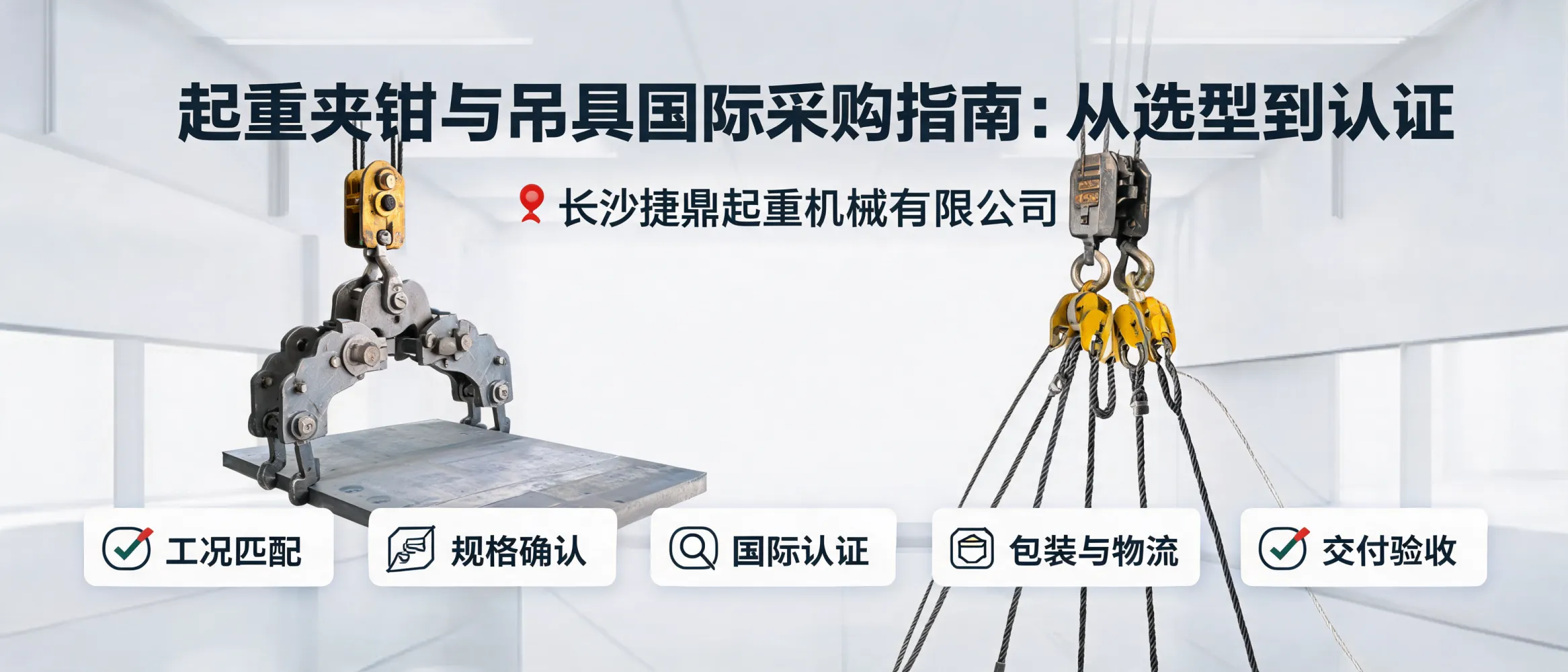
Changsha Jieding Lifting Machinery Co., Ltd. supports B2B buyers with a practical procurement guide for lifting clamps and slings. Built around export trade experience and real purchasing needs, this page helps you match the right product to the worksite, confirm technical details, understand certification requirements, and organize delivery with greater confidence.
In international sourcing, small specification differences can affect load handling, compatibility, compliance, and delivery timing. A clear procurement process reduces selection errors and helps buyers move faster from inquiry to order confirmation.
This guide focuses on the key checkpoints that matter in cross-border B2B purchasing: work-condition matching, technical specification confirmation, international certification review, packaging and logistics planning, and delivery inspection.
Before comparing quotations, define the actual application scenario. Lifting clamps and slings are selected according to how the load will be moved, lifted, stored, or transferred. A product that fits one use case may not be suitable for another.
A complete specification discussion helps both sides avoid misunderstandings. For lifting clamps and slings, buyers should confirm the main parameters in writing before procurement and shipment.
For overseas procurement, certification review is an important part of compliance-oriented purchasing. Depending on the destination market and project requirements, buyers may need to review documents related to product conformity and quality management systems.
Recommended review points
Changsha Jieding Lifting Machinery Co., Ltd. supports certification-related communication as part of its export service process, helping B2B buyers organize the information needed for international purchasing decisions.
In cross-border trade, packaging and logistics are not separate afterthoughts. They affect product protection, customs handling, transit safety, and final acceptance. A practical export plan should take both product characteristics and destination requirements into account.
Protect the product from movement, abrasion, moisture, and handling damage during transit.
Coordinate shipping method, cargo readiness, and documentation to support on-time dispatch.
Keep the commercial documents aligned with the product details and destination customs expectations.
A delivery inspection process helps buyers verify whether the received goods are consistent with the approved order. This is especially important in international procurement, where communication, transport, and documentation all influence acceptance.
A practical acceptance process normally checks model consistency, quantity, packaging condition, labeling, and document completeness.
When these points are reviewed in advance, the buyer can reduce rework, avoid delays, and maintain a smoother receiving process.
As a professional foreign trade company focused on lifting supporting equipment, Changsha Jieding Lifting Machinery Co., Ltd. builds its service around the real needs of international buyers. The company’s strength lies not only in product sourcing, but also in trade coordination and response efficiency.
For B2B buyers seeking lifting clamps and slings in international markets, a careful procurement process is often the fastest way to reduce risk. With clear specifications, compliance awareness, and reliable trade support, purchasing decisions become easier to manage and more consistent with project needs.


