Selecting Lifting Clamps & Rigging for Overseas Engineering Projects
05 08,2026
Changsha Jieding Lifting Machinery Co., Ltd.
Industry Guide
Changsha Jieding Lifting Machinery Co., Ltd. provides a practical overseas procurement guide for selecting lifting clamps and rigging. This page outlines key selection factors — load profile, environment, lifting method, usage frequency, equipment compatibility, transport and compliance — to help B2B buyers prepare precise RFQs and reduce procurement risk.
Practical guide for selecting lifting clamps & rigging for overseas engineering projects
This page helps B2B buyers prepare clear RFQs and reduce procurement risk when specifying lifting clamps, rigging and related lifting accessories for international projects. The guidance reflects common selection drivers used by engineering procurement teams — load profile, operating environment, lifting method, usage frequency, equipment compatibility, transport constraints and compliance requirements.
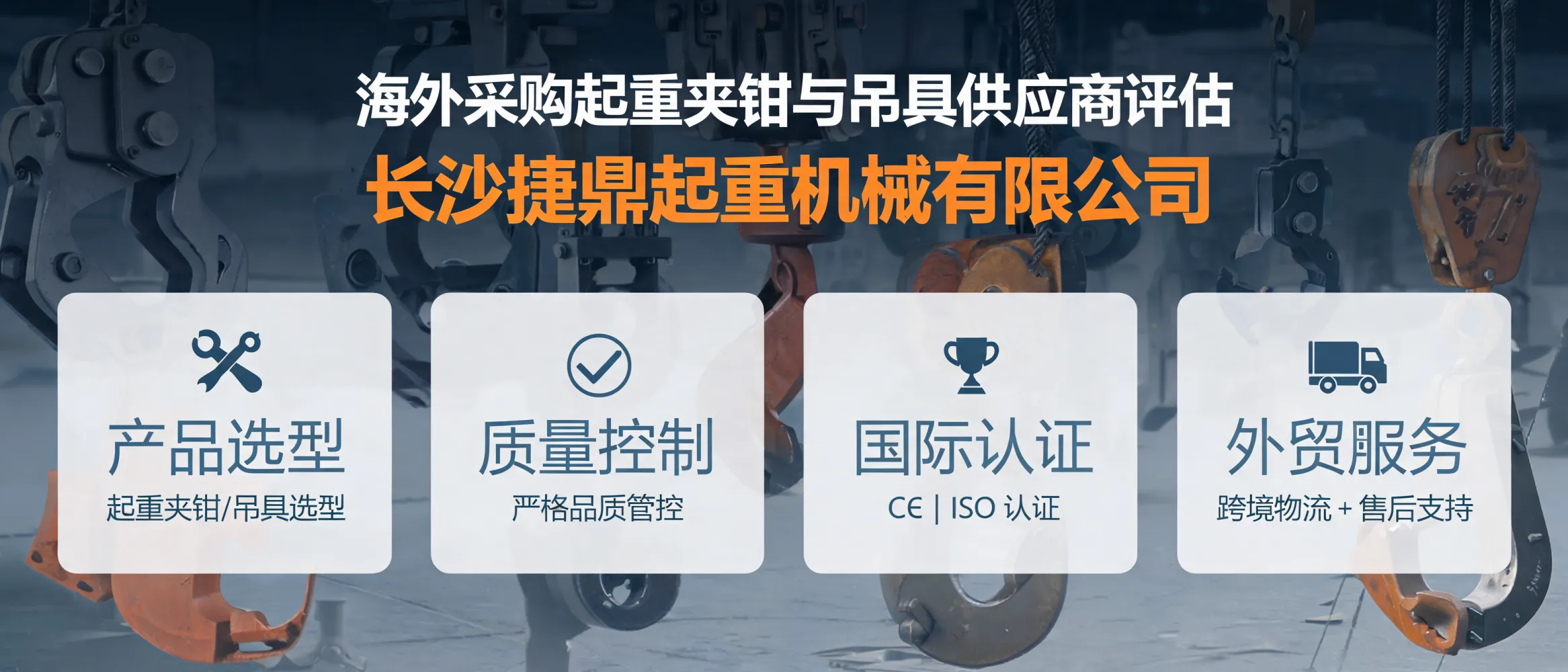
Changsha Jieding Lifting Machinery Co., Ltd. supports overseas procurement with product selection advice, international certification guidance, logistics coordination and after-sales support.
1. Define load profile
Specify the actual lifted weight, load geometry and center of gravity. Include the following:
- Maximum and typical working load (kg or t)
- Load dimensions and material type (e.g., steel plate, concrete block)
- Single or multiple lift points; presence of slings or spreader beams
2. Assess operating environment
Environmental factors affect material selection, coating and seals:
- Indoor vs. outdoor, exposure to salt spray or chemicals
- Temperature range and humidity
- Site constraints: confined lifts, overhead obstructions, offshore platforms
3. Choose the lifting method
Match clamp and rigging type to the lift method:
- Tandem or single-point lifts
- Vertical lift, horizontal lift, rotational handling
- Attachment to slings, hooks, eyebolts or fixed lifting points
4. Determine usage frequency & duty cycle
Duty cycle affects choice of materials and safety factors:
- Occasional use vs. continuous production handling
- Expected service life and maintenance intervals
- Need for replaceable wear parts
5. Verify equipment compatibility
Ensure clamp geometry and connection points fit the lifting equipment:
- Clearance to cranes, spreaders and booms
- Attachment interfaces: shackle sizes, hook throat openings, pin diameters
- Control and actuation: manual, hydraulic, remote-operated
6. Plan for transport & packing
Consider shipping constraints for overseas projects:
- Weight and volume limits for air / sea freight
- Packaging for corrosion protection during transit
- Customs documents and export packaging standards
7. Compliance, testing & documentation
Specify regulatory and inspection requirements relevant to the project:
- Required certificates or class approvals (state which standard or local regulation)
- Load test and inspection reports at delivery
- Marking, traceability and user manuals in the project language
Actionable RFQ checklist (use when requesting quotes)
Providing as much of the following information as possible will shorten supplier lead time and reduce specification risk.
| Project / Purchase reference |
[Project name / RFQ number] |
| Item description |
e.g., plate clamp, vertical plate clamp, spreader beam |
| Working load limit (WLL) |
Maximum and typical lift weights |
| Load details |
Dimensions, material, surface condition, typical packing |
| Environment |
Temperature, humidity, corrosive exposure, offshore/indoor |
| Lifting method & attachments |
Single/tandem, use with slings, hook type, spreader beams |
| Certifications / tests required |
Specify standards, load test certificates, inspection reports |
| Delivery & logistics |
INCOTERMS, delivery location, packing requirements |
| Attachments |
Drawings, photos, site sketches, existing equipment photos |
Recommended selection flow
- Collect RFQ checklist data and site constraints.
- Shortlist clamp types and rigging arrangements that meet WLL and geometry.
- Confirm material, coatings and actuation method for the environment.
- Request supplier verification: drawing approval, test plan and delivery schedule.
- Agree on inspection, marking and documentation before shipment.
How Changsha Jieding can assist
- Provide technical selection guidance to align clamps and rigging with project requirements.
- Support international documentation and logistics for delivery to Southeast Asia, Middle East, Europe and Africa.
- Offer coordinated pre-shipment inspection and basic after-sales support as part of the export process.
Quick tips to reduce procurement risk
- Attach clear photos and CAD drawings to RFQs — visual context avoids misinterpretation.
- List exact standards and test reports required at delivery to prevent rework.
- Allow review time for supplier drawings and test plans before production starts.
- Specify spare parts and wear items if lifts are high-frequency or abrasive.
Next step — preparing your RFQ
Use the checklist above to prepare a concise RFQ. When you have the documents ready, you can submit them to our sales team for technical review and a commercial offer.
Changsha Jieding Lifting Machinery Co., Ltd. is available to review specifications and advise on compliance and logistics for overseas engineering projects.