Lifting Clamp and Spreader Selection Guide for International Projects
15 09,2026
Changsha Jieding Lifting Machinery Co., Ltd.
Industry Guide
Changsha Jieding’s guide explains how overseas buyers and project teams can select lifting clamps and spreaders based on load capacity, operating conditions, safety requirements, compliance, logistics, and after-sales support.

Lifting Clamp and Spreader Selection Guide for International Projects
This guide helps overseas buyers and project teams evaluate lifting clamps and spreaders by key selection criteria — rated load, operating conditions, lifting frequency, connection methods, safety & compliance, logistics and after‑sales support. It highlights how Changsha Jieding Lifting Machinery Co., Ltd.'s container spreader aligns with international project requirements.
When to prioritise specific characteristics
- High rated load → prioritise structural strength, proven FEA design and certified lifting components.
- Harsh environments (coastal, dusty) → select corrosion protection, sealed sensors and robust bearings.
- High-frequency operations → choose lightweight but high‑strength spreaders, fast telescoping and minimal maintenance parts.
- Cross‑border procurement → verify HS codes, export documentation and supplier export experience.
Key procurement reminders
- Confirm rated capacity and safety factor with supplier documentation.
- Request installation and operational training for site teams.
- Check compatibility with existing cranes, shackles and container locks.
- Plan logistics: packing size, weight declaration and HS code (e.g., 8609001900 for container spreader).
Selection factors — detailed checklist
1. Rated load and lifting safety
Verify the working load limit (WLL) and required safety factor for your project. Ask for design verification (FEA reports where applicable) and manufacturer test records. Prefer solutions with integrated interlocks or position sensing to reduce human error.
2. Operating environment
Match material, surface treatment and sensor protection to site conditions (marine, high dust, extreme temperature). Sealed electronics and corrosion‑resistant coatings extend service life in coastal or tropical ports.
3. Lifting frequency and duty cycle
For continuous terminal operations select lightweight, FEA‑optimised spreaders and components designed for frequent cycles to minimise downtime and maintenance costs.
4. Connection method and compatibility
Confirm interface dimensions and operation mode (manual pins, hydraulic, automatic locks). Compatibility with 20ft and 40ft containers is a common requirement — ensure telescopic range and locking positions meet your workflow.
5. Safety, compliance and documentation
Require CE/EN, local regulatory compliance and factory quality systems (e.g., ISO9001). Obtain user manuals, maintenance plans and inspection intervals as part of the delivery package.
6. Logistics, packing and customs
Confirm HS codes, gross package sizes and weights early to avoid customs delays. Ensure the supplier can provide export documentation and assistance for cross‑border shipment.
7. After‑sales support and training
Ask about pre‑sales selection guidance, on‑site installation, operator training and spare parts availability. Service responsiveness is critical for international projects where downtime has high cost.
Product spotlight — Container Spreader
Changsha Jieding's container spreader is developed for ports, logistics parks and construction sites with features geared toward international operations and high‑frequency handling.
- Automatic rotary locking + position sensing — ensures precise engagement and reduces risk of unintentional release.
- Telescopic compatibility — supports quick switching between 20ft and 40ft container positions to improve throughput.
- FEA‑optimized structure — balances high strength and reduced self‑weight for frequent heavy use.
- ISO9001 production — manufactured under a quality management system with export experience to multiple regions.
- Full technical support — selection guidance, installation training and after‑sales response offered.
| Product |
Container spreader |
| HS code |
8609001900 |
| Compatibility |
Telescopic for 20ft / 40ft containers |
| Key features |
Automatic locking, position sensing, FEA‑optimised lightweight structure |
| Quality system |
ISO9001 production process |
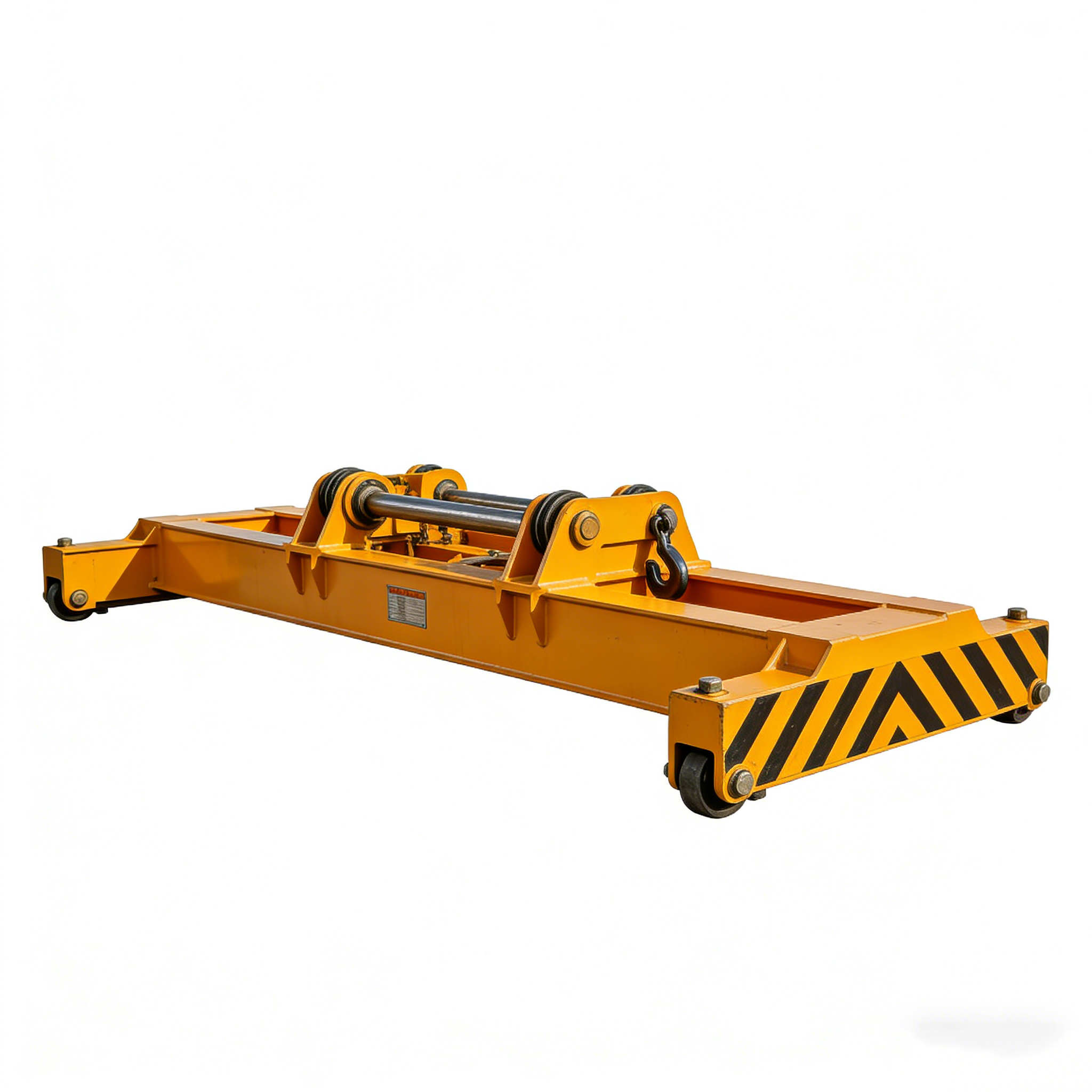
Image: telescopic container spreader with automatic locking and position sensing
Practical selection checklist (quick)
- Confirm site rated load and choose spreader/clamp with matching WLL and documented FEA or test evidence.
- Validate environmental protection level for sensors and moving parts.
- Ensure mechanical and control interfaces match crane and terminal handling systems.
- Request certificates and ISO9001 production confirmation for cross‑border compliance.
- Agree logistics packaging, HS code and documentation with supplier before shipment.
- Plan for on‑site commissioning, operator training and spare parts list.
How Changsha Jieding supports international projects
Changsha Jieding Lifting Machinery Co., Ltd. provides end‑to‑end support for cross‑border procurement of lifting clamps and spreaders: product selection guidance, conformity documentation, packing & export handling, on‑site installation assistance and operator training. The company’s export footprint includes Southeast Asia, the Middle East, Europe and Africa.
Tip:
For international tenders, include technical acceptance criteria for locking verification, sensor diagnostics and maintenance intervals in your purchase order to ensure clear expectations.
Next steps
If your project requires a container spreader or other lifting accessories, share the following with the supplier for a precise recommendation:
- Rated lifting capacity and typical load cases
- Operating environment and expected duty cycle
- Existing crane interface and required control signals
- Shipping destination and customs requirements
Contact the Changsha Jieding sales team to request detailed product datasheets, certificates and a tailored selection proposal.


