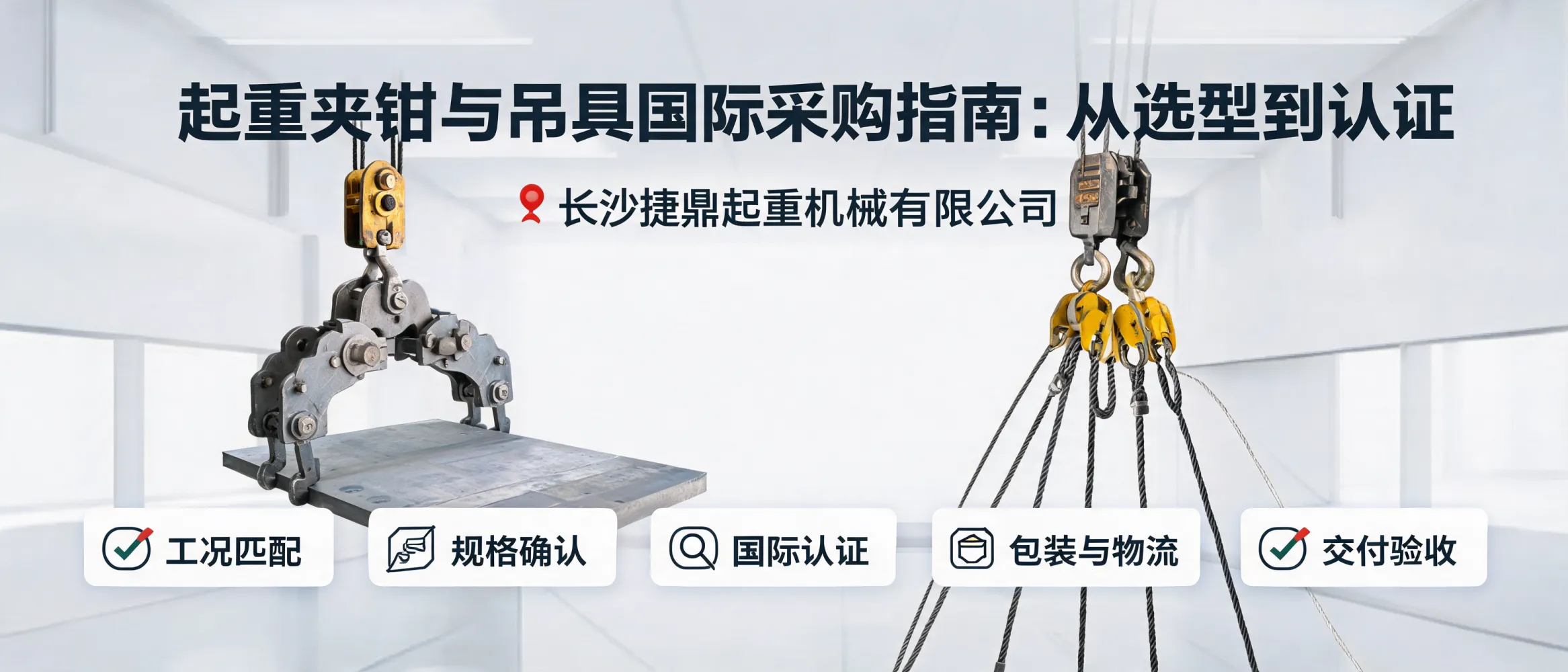
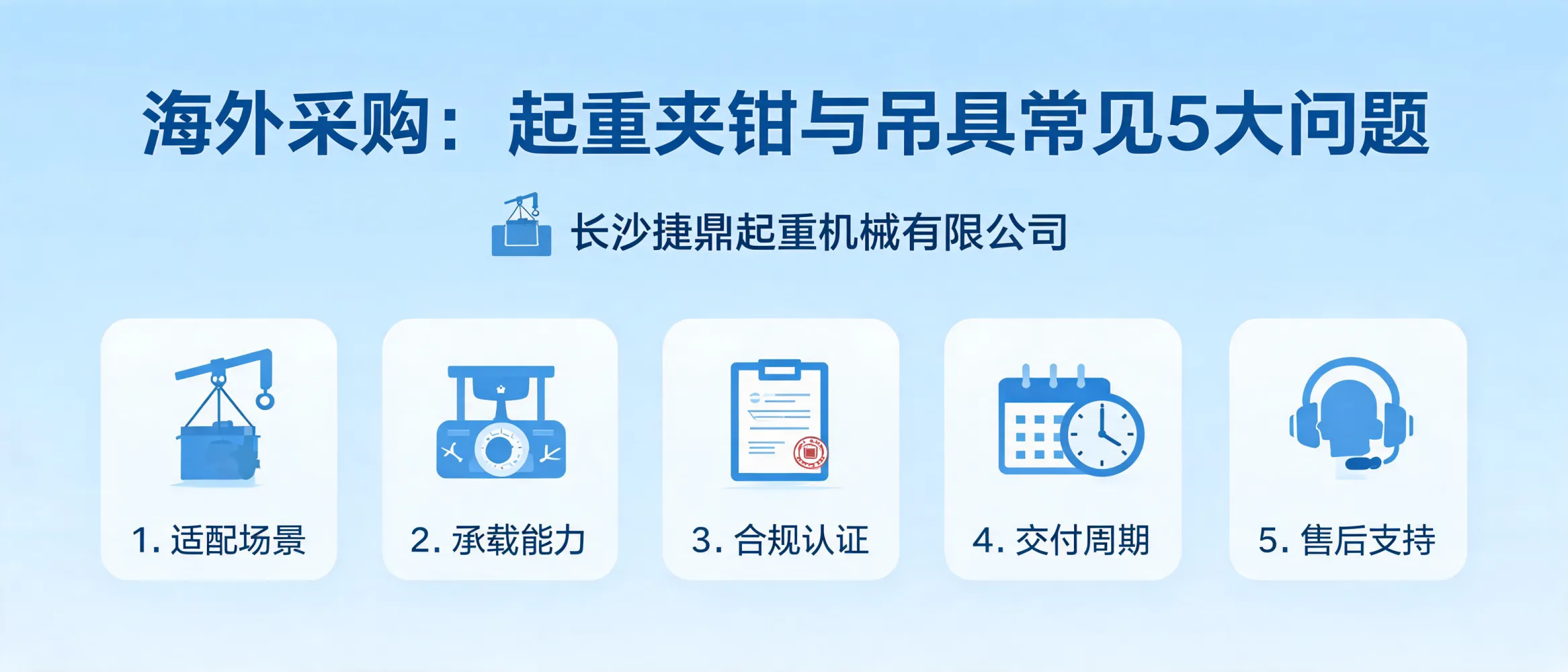
Lifting attachments and clamps are important interface components between lifting equipment and the load. The right attachment helps ensure compatibility, controlled handling and efficient material movement across ports, logistics yards, construction sites and other industrial work environments. For overseas buyers, contractors and equipment distributors, selection should consider the load type, lifting equipment, operating frequency, safety features and supplier support.
Lifting attachments are devices installed between a crane, hoist or other lifting machine and the load being handled. They are designed to connect with, support or secure different load types during lifting and positioning operations. Lifting clamps are one category of attachment used for gripping or holding a load according to its shape, material and handling requirements.
A container spreader is a specialized lifting attachment for handling freight containers. It connects to the lifting equipment and engages with the container’s corner fittings. Compared with a general-purpose lifting accessory, a container spreader must provide accurate engagement, stable support and compatibility with the container dimensions required by the project.
The attachment creates a controlled connection between the lifting machine and the load, helping operators handle the load according to the intended lifting method.
Suitable attachment design supports more accurate engagement and positioning, which is particularly important in repetitive loading and unloading operations.
Features such as telescopic adjustment and automatic locking can help reduce manual handling steps and support faster equipment changeover.
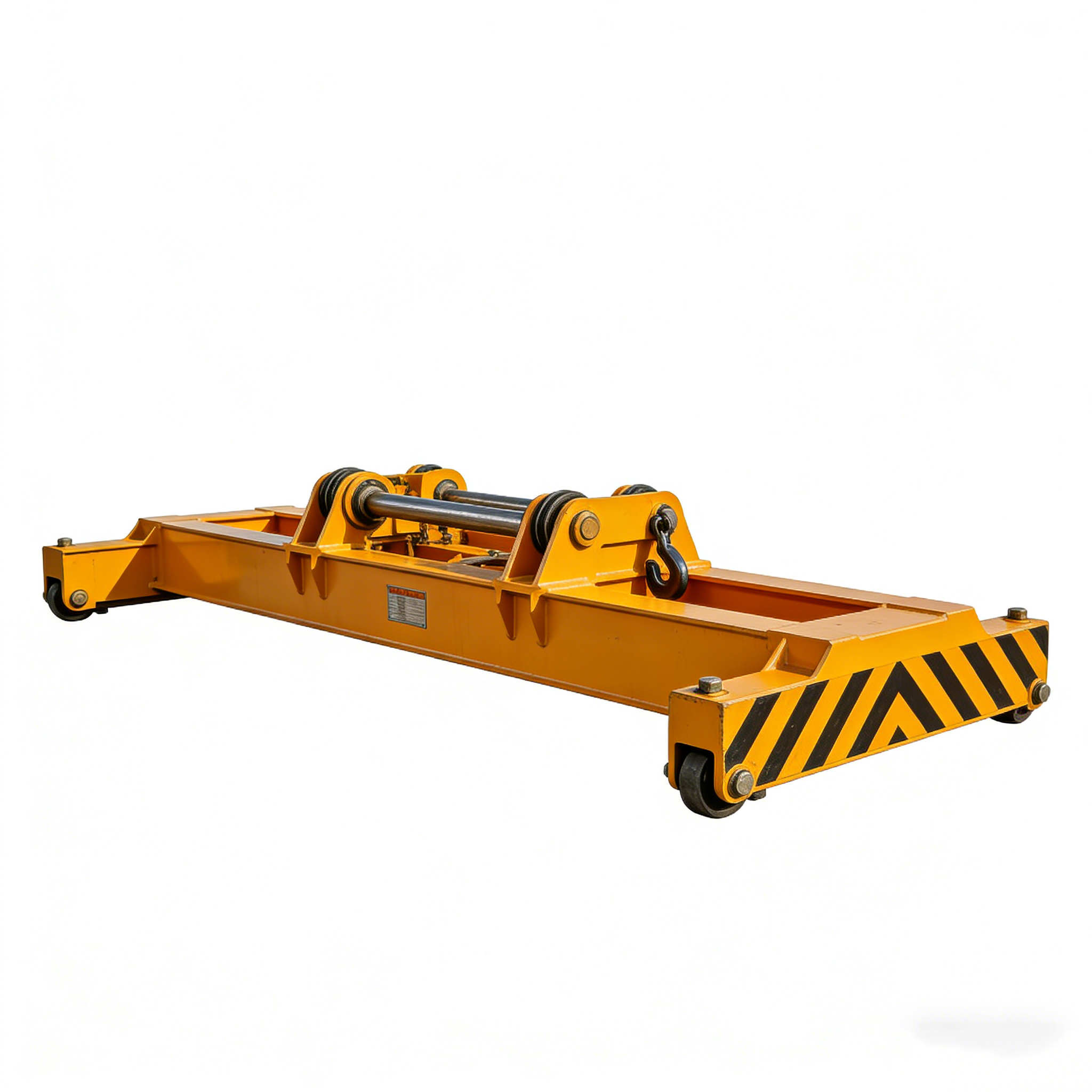
Changsha Jieding Lifting Machinery Co., Ltd. supplies a container spreader developed for ports, logistics yards and construction sites. Its telescopic structure supports quick switching between 20-foot and 40-foot containers, helping the operator adapt the attachment to common container-handling requirements.
The design combines an automatic rotating lock with position sensing to support accurate engagement and provide an additional control point during lifting operations. The structure is optimized through finite element analysis (FEA), balancing strength and reduced weight for frequent heavy-duty use.
| Application environment | Typical handling requirement | Relevant consideration |
|---|---|---|
| Ports | Repeated container loading and unloading | Engagement accuracy, operating efficiency and safety control |
| Logistics yards | Flexible handling of containers across different work areas | 20 ft/40 ft compatibility and ease of adjustment |
| Construction sites | Material movement under changing site conditions | Equipment matching, structural strength and technical guidance |
Changsha Jieding Lifting Machinery Co., Ltd. is a B2B export company focused on lifting attachments, clamps and related lifting equipment. Based in Changsha, the company benefits from the region’s engineering machinery industry and international supply-chain resources.
The company provides support across product selection, international trade coordination, logistics delivery and after-sales service. Its production process is ISO9001 certified, and its products are supplied to customers in Southeast Asia, the Middle East, Europe and Africa.
When evaluating a container spreader or other lifting attachment, begin with the load type, container dimensions, lifting equipment, operating frequency and required safety functions. Providing these details to the supplier allows the technical team to assess suitability more accurately and recommend the appropriate configuration. Changsha Jieding Lifting Machinery Co., Ltd. supports overseas B2B customers from initial consultation through installation training and after-sales communication.