
International Project Procurement Guide
Selecting the right lifting attachment or clamp requires more than checking rated capacity. Overseas contractors, equipment buyers, port operators, logistics companies, and industrial users should evaluate the lifting object, working environment, operating frequency, safety requirements, compliance documentation, delivery arrangements, and technical support before placing an order.
The lifting attachment should be selected according to the object being handled and the way it will be connected to the lifting equipment. Clamps are generally considered for specific gripping and handling requirements, while spreaders and other lifting attachments are used to connect lifting machinery with loads such as containers or other standardized objects.
Confirm the object’s dimensions, connection points, surface or locking requirements, and whether the load is standardized or variable.
Provide the expected load information and operating requirements so the attachment can be assessed for the intended lifting task.
Consider port, logistics, construction, or industrial conditions, as well as the expected frequency and intensity of use.
| Selection factor | What to verify | Why it matters |
|---|---|---|
| Load and dimensions | Load information, dimensions, lifting points, and compatibility with the handling equipment | Helps match the attachment to the actual lifting task |
| Operating frequency | Occasional, regular, or high-frequency lifting cycles | Supports appropriate structural and operational planning |
| Safety functions | Locking, position detection, operator procedures, and site safety requirements | Reduces the risk of incorrect engagement or unsafe operation |
| Compliance and quality | Required documentation, quality controls, and applicable international project requirements | Makes procurement and project review more transparent |
| Service and delivery | Packaging, logistics, installation guidance, training, and after-sales response | Supports reliable deployment after the equipment arrives |
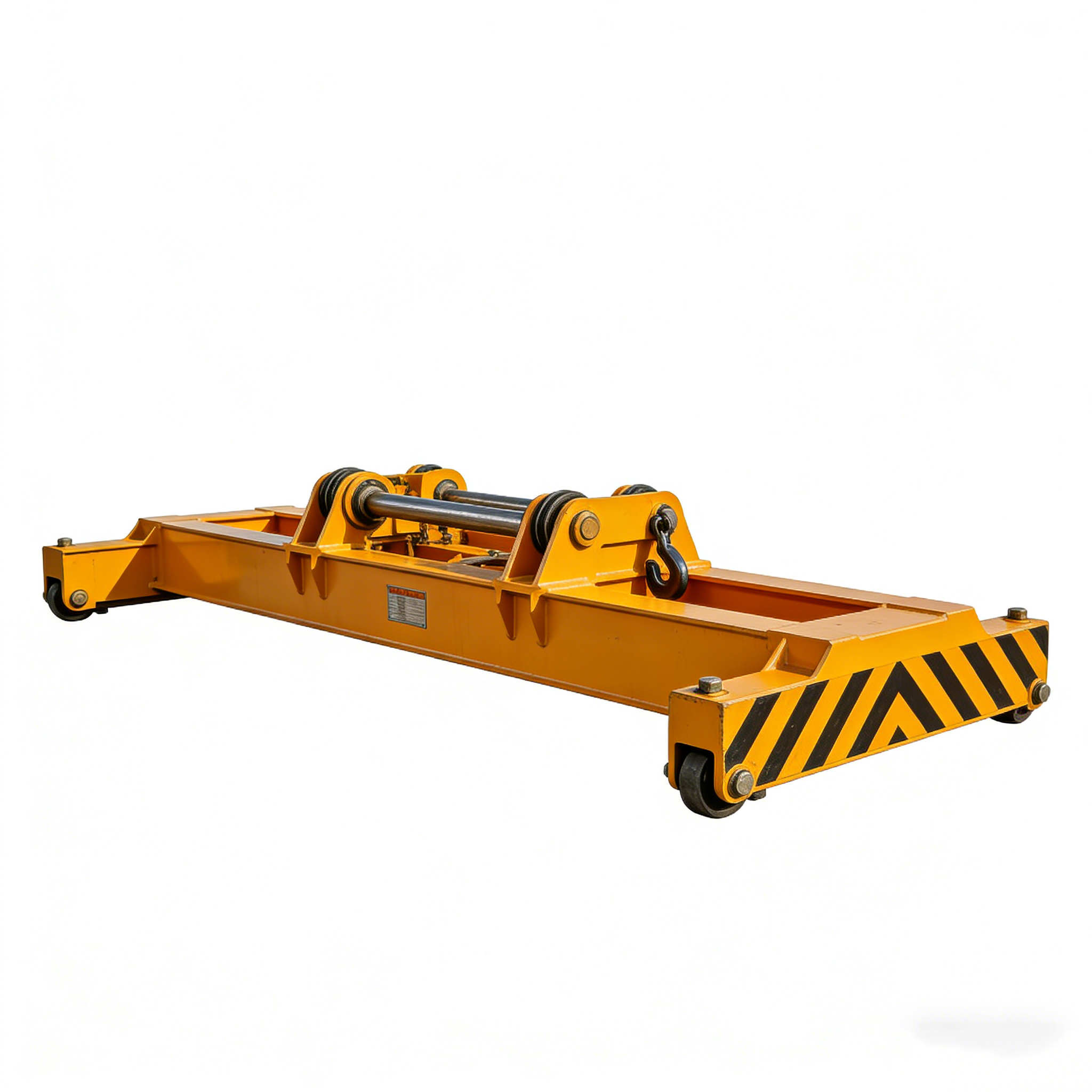
For container handling projects, Changsha Jieding Lifting Machinery Co., Ltd. provides a container spreader designed for ports, logistics parks, construction sites, and other high-frequency lifting applications. The product is developed around practical requirements for container engagement, lifting efficiency, and operational control.
Providing clear project information helps Changsha Jieding evaluate the appropriate lifting attachment or clamp more efficiently. Buyers should prepare:
Changsha Jieding Lifting Machinery Co., Ltd. supports overseas customers through product selection, compliance coordination, logistics arrangements, installation guidance, training, and after-sales response. With a focus on lifting attachments, clamps, and related equipment, the company provides practical B2B support for customers in international construction, port, logistics, and industrial projects.
For a suitable container spreader, lifting attachment, or clamp recommendation, share your application and project requirements with the Jieding team.


