Choosing the right lifting accessories and clamps is not only a procurement decision, but also a key step in improving lifting safety, handling efficiency, and equipment compatibility. For B2B buyers, the most reliable selection process starts with a clear understanding of the working load, the workpiece characteristics, and the actual operating environment.
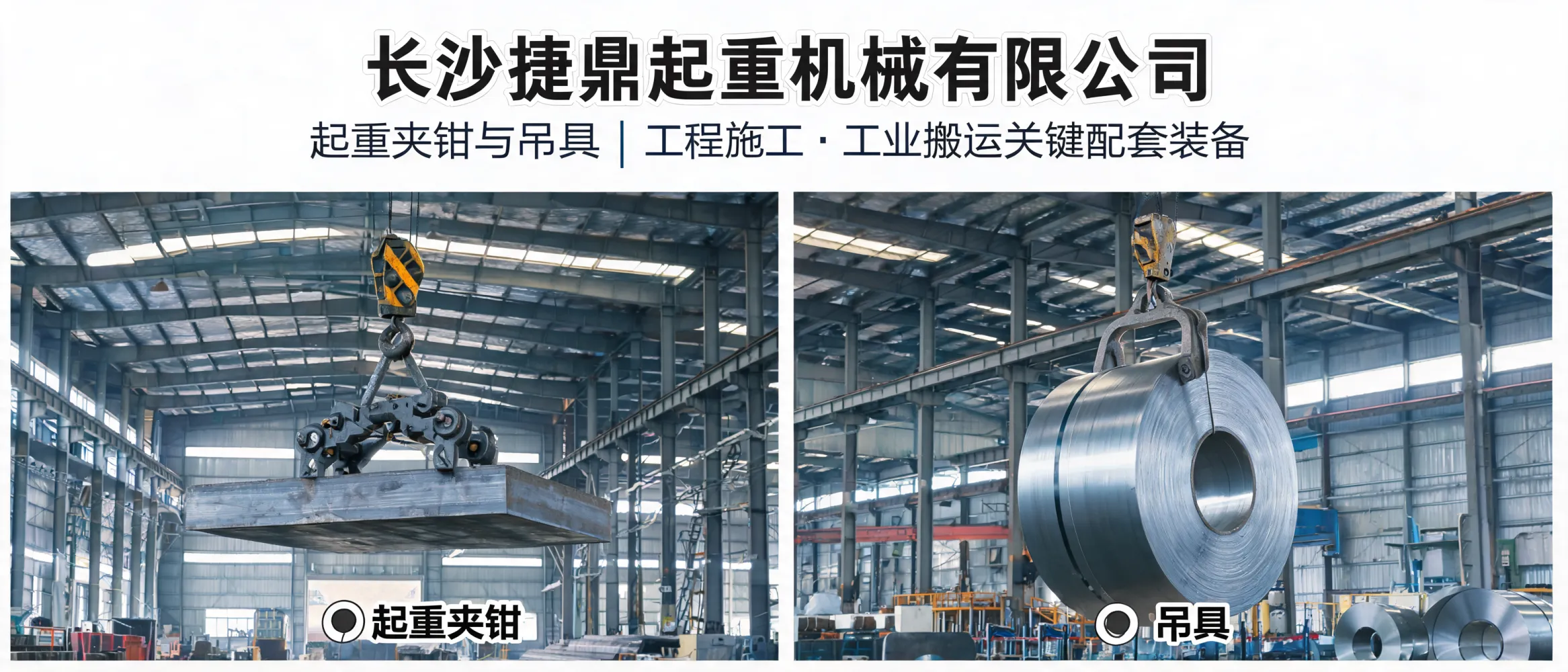
Changsha Jieding Lifting Machinery Co., Ltd. focuses on lifting supporting equipment for global trade and service, with core products including clamps and lifting accessories. Based on our export-oriented service experience, we help customers evaluate product fit from a practical purchasing perspective and reduce mismatches between lifting tools, hoisting systems, and application conditions.
A practical selection process should begin with the basic lifting conditions. These factors determine whether a clamp or lifting accessory can work safely and consistently in real operation.
The same lifting accessory may perform well in one setting and become unsuitable in another. For this reason, procurement should not rely on load alone. Repeated use, site conditions, and exposure risks all affect product selection.
For frequent or repetitive lifting tasks, customers should consider durability, ease of operation, and consistency of grip performance. A product that is suitable for occasional use may not be ideal for continuous operation.
Temperature, humidity, dust, corrosion exposure, indoor or outdoor use, and site handling methods can all influence product suitability and maintenance requirements.
Lifting accessories and clamps should work as part of a complete hoisting system. Compatibility with the existing equipment is essential for stable operation, efficient installation, and safer handling.
| Selection point | What to check |
|---|---|
| Hoist compatibility | Confirm whether the lifting accessory can be matched with the intended hoisting equipment and operating method. |
| Connection method | Review how the product connects, suspends, or grips the workpiece within the complete lifting setup. |
| Operational fit | Make sure the selected product supports the required handling workflow and does not create unnecessary adjustment or downtime. |
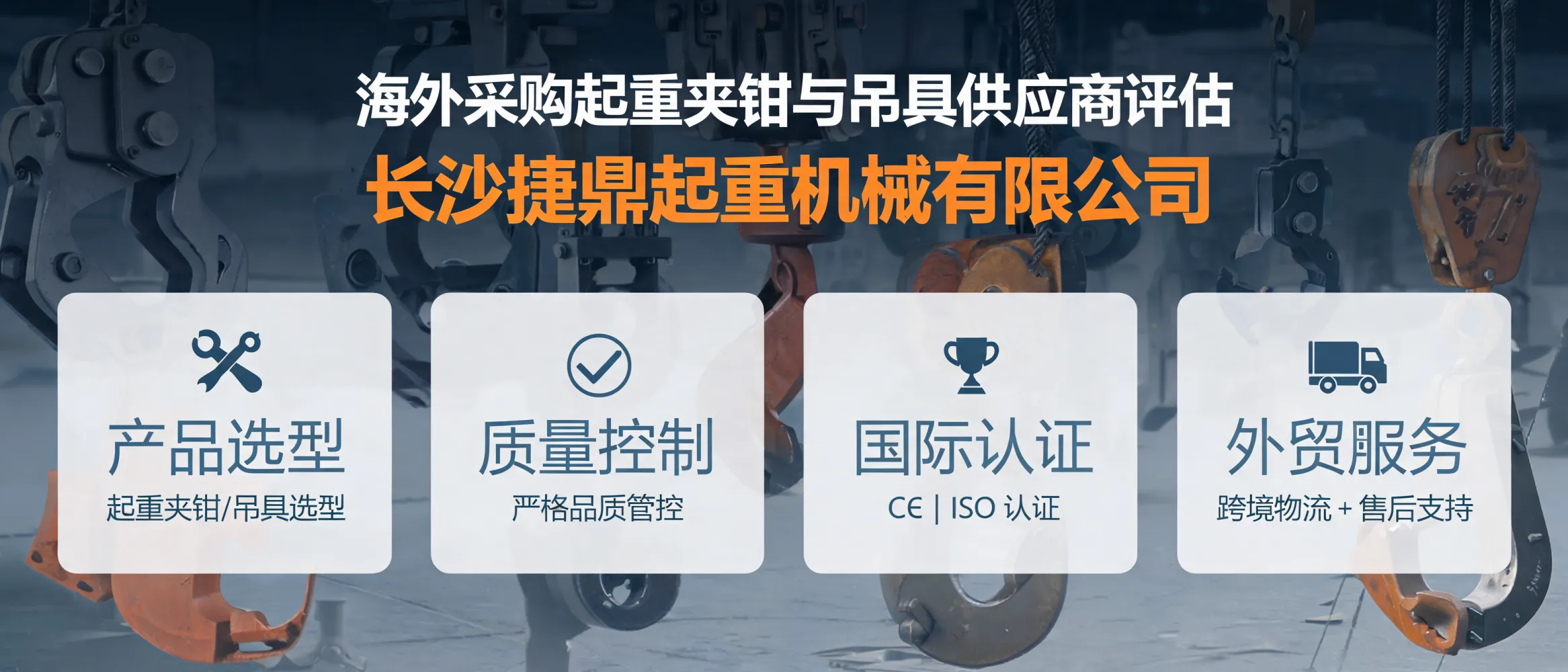
For international buyers, standardized procurement helps reduce communication gaps and purchasing risk. A structured selection process can make it easier to compare options and confirm technical alignment before shipment.
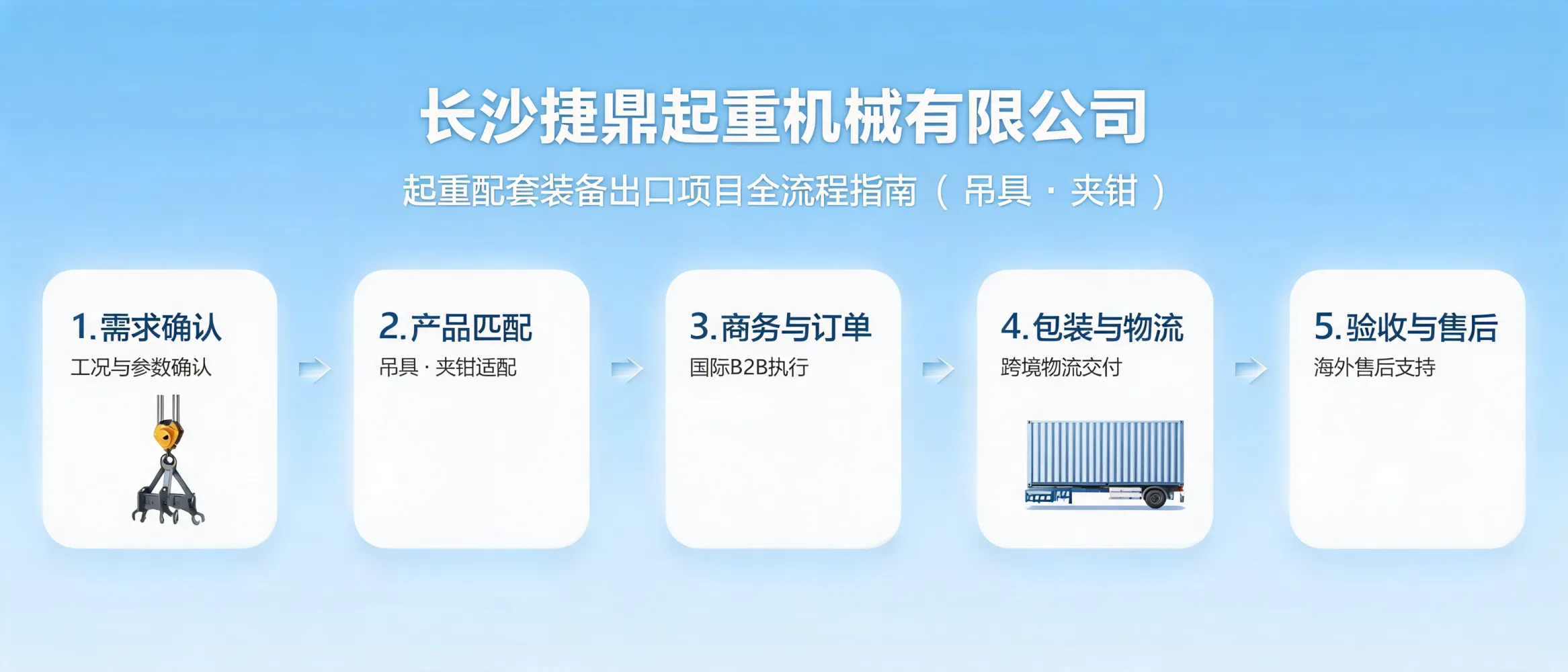
As a professional foreign trade company in the lifting equipment field, Changsha Jieding Lifting Machinery Co., Ltd. provides more than product sourcing. We support customers through a complete export service workflow designed for B2B purchasing needs.
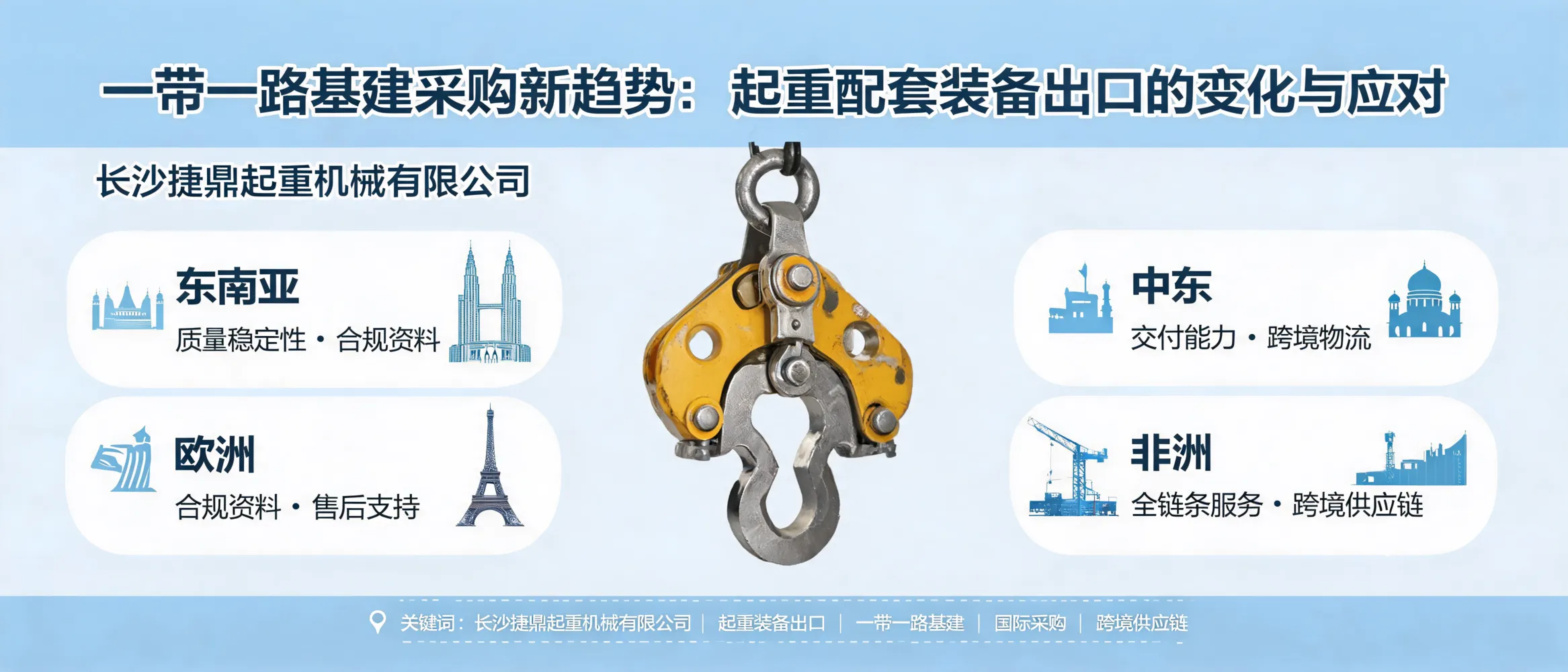
This approach is especially relevant for infrastructure-related projects and international procurement programs that require consistent communication, practical product matching, and reliable export service.
In lifting applications, the right product is not simply the one with the highest capacity. It is the one that matches the load, the workpiece, the environment, and the hoisting system in a way that supports safe and efficient operation.
That is the selection logic behind our lifting accessories and clamps guide, and it is also the service logic we apply to B2B procurement.