Lifting Equipment Guide
Lifting accessories and clamps connect lifting equipment with the load and directly influence handling safety, operating stability and installation compatibility. For overseas buyers, the right selection should consider the lifting system, load characteristics, working conditions, safety features and applicable compliance requirements.
Lifting accessories are supporting components used with hoists, bridge cranes, gantry cranes and other lifting systems. They help connect, retain, position or control a load during lifting and movement. Depending on the application, the accessory may be integrated into the lifting system or selected as a replaceable component.
Clamps are load-handling devices designed to grip or hold a workpiece in a controlled manner. The correct clamp or accessory must match the load’s shape, surface condition, weight, lifting direction and the requirements of the complete handling system. A component should not be selected by appearance alone.
| Category | Typical role | Selection focus |
|---|---|---|
| Hooks | Connect the hoist or crane system to the load or another lifting component. | Load capacity, connection dimensions, safety latch and compatibility with the lifting system. |
| Clamps | Grip or hold suitable workpieces during lifting and positioning. | Workpiece material, surface condition, gripping range, lifting direction and rated capacity. |
| Slings and connecting components | Provide flexible load connection and support within a lifting arrangement. | Configuration, connection method, load distribution and operating environment. |
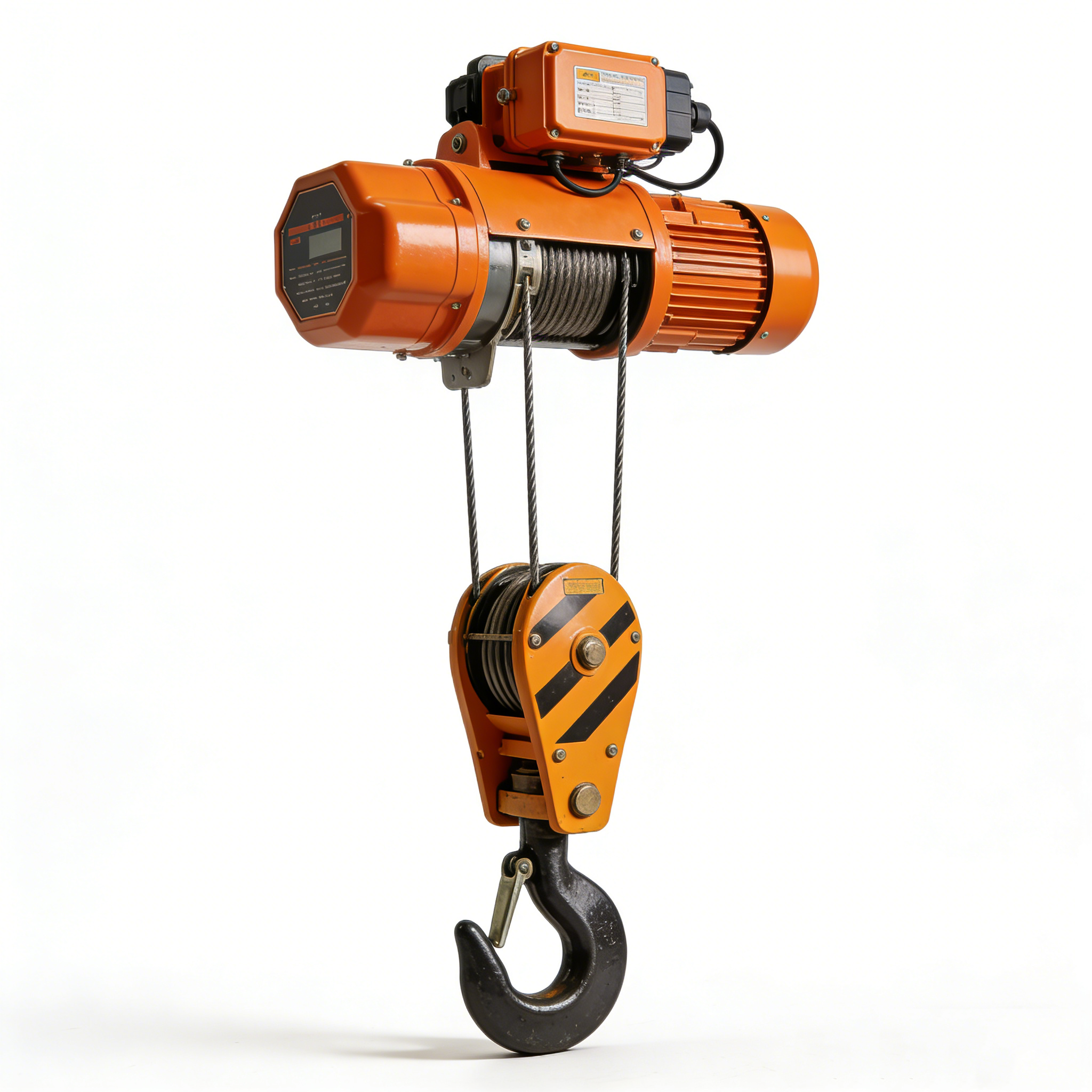
The electric hoist hook supplied by Changsha Jieding Lifting Machinery Co., Ltd. is designed for electric hoists, bridge cranes and gantry crane systems. It is intended for industrial handling scenarios such as equipment movement, mould lifting and warehouse logistics, subject to correct system matching and operating procedures.
The forged steel construction and heat treatment are intended to provide high tensile strength, toughness and impact resistance for demanding industrial use.
A spring-type overload limiter can alert the operator and cut power when the load exceeds the specified safe capacity, helping reduce the risk of overload-related damage.
The anti-release safety latch helps reduce unintended disengagement, while the hardened wheel surface is designed to reduce friction and support smoother lifting cycles.
Safe handling depends on the complete lifting system, not on a single component. Before operation, buyers and users should confirm that the hook, clamp, hoist, crane and load connection are correctly matched and that the equipment is used within its specified limits.
For international procurement, lifting accessories should be assessed against the destination market, project specifications and applicable safety requirements. The electric hoist hook is developed with reference to ISO and EN requirements, with CE and SGS certification support available according to the product configuration and project needs.
As an export-focused lifting equipment supplier, Changsha Jieding Lifting Machinery Co., Ltd. provides product selection assistance, technical communication, customs clearance support and OEM customization. This service approach helps overseas buyers evaluate compatibility, prepare procurement information and coordinate delivery for different regional requirements.
Procurement note: To identify a suitable lifting accessory or clamp, provide the load weight, load type, lifting method, equipment model, working environment and destination-market requirements. These details allow the product configuration and documentation to be reviewed more accurately.