Selecting the right lifting clamp or spreader is an important decision for international engineering projects, port operations, logistics facilities, and construction sites. The equipment should match the load, lifted-object characteristics, operating environment, safety requirements, quality standards, delivery conditions, and available technical support.
Changsha Jieding Lifting Machinery Co., Ltd. supplies lifting clamps and spreaders for global B2B customers, supporting product selection, international trade coordination, logistics, installation guidance, training, and after-sales response.
A suitable lifting accessory is selected according to the complete operating scenario rather than product name alone. International contractors and equipment buyers can use the following factors as a practical evaluation framework.
Confirm the working load, lifting frequency, load distribution, and expected operating conditions. The selected equipment should be appropriate for the actual lifting task and used within its specified limits.
Consider whether the equipment will be used in a port, logistics yard, construction site, or other material-handling environment. Weather, operating intensity, available lifting machinery, and maintenance conditions should also be reviewed.
The dimensions, connection points, structural form, and handling requirements of the lifted object influence the choice between a lifting clamp, spreader, or other lifting accessory.
Look for reliable locking, position confirmation, stable engagement, and clear operating procedures. These features help reduce the risk of incorrect operation during repeated lifting cycles.
| Evaluation area | Questions for buyers | Why it matters |
|---|---|---|
| Load and duty cycle | What load is lifted, and how frequently will the equipment operate? | Supports appropriate equipment matching for the intended work pattern. |
| Compatibility | Does the accessory match the crane, spreader beam, connection system, or container format? | Helps avoid installation difficulties and unnecessary operational changes. |
| Safety functions | Are locking and position conditions visible or detectable during operation? | Improves operational control and helps reduce the possibility of incorrect engagement. |
| Quality and documentation | Can the supplier provide consistent production quality and relevant technical information? | Makes procurement review, project coordination, and future maintenance more manageable. |
| Export and support capability | Can the supplier support international delivery, installation guidance, training, and after-sales communication? | Provides continuity from pre-sales selection through project use. |
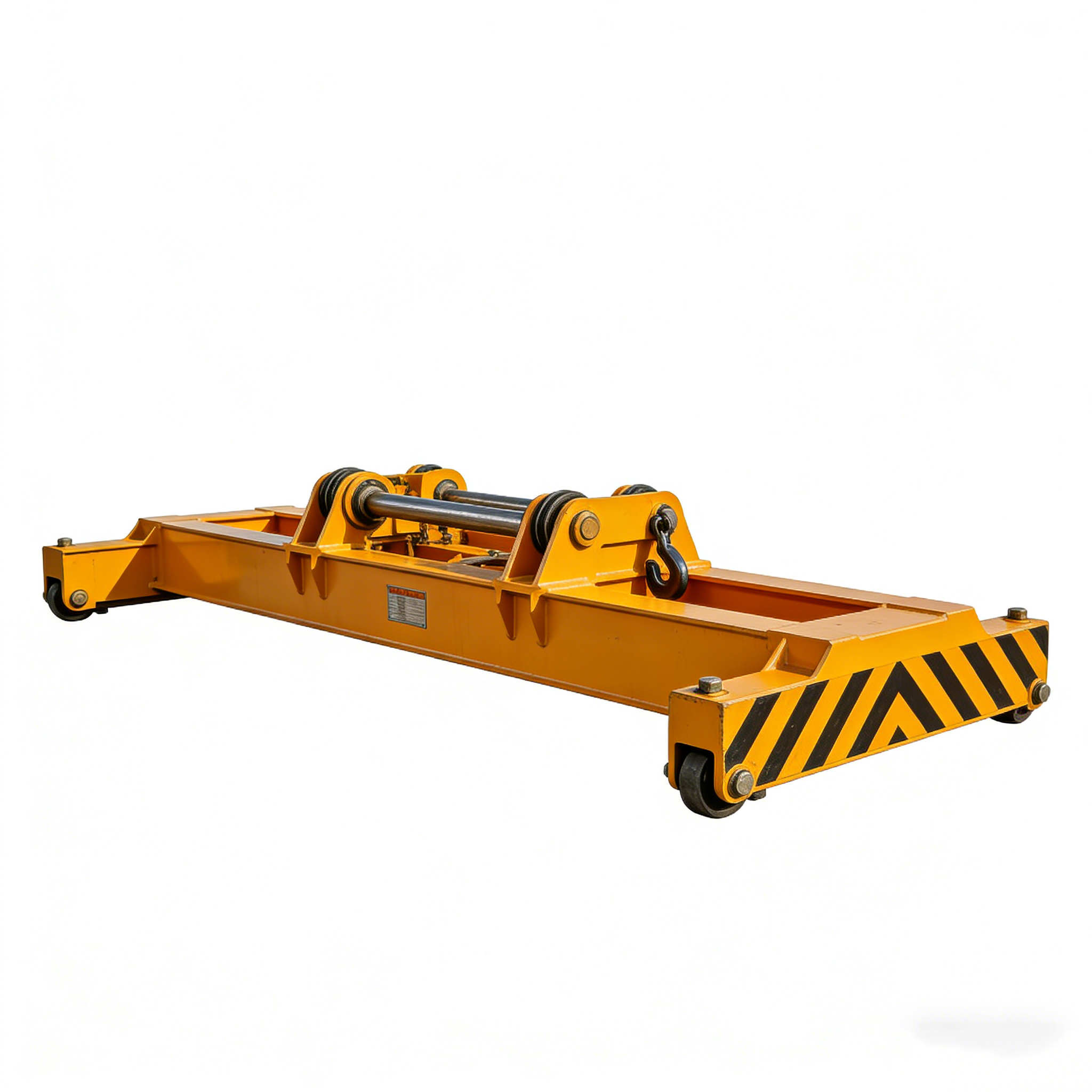
Changsha Jieding’s container spreader is designed for container-handling operations in ports, logistics parks, and construction projects. It uses an automatic rotary locking system with position sensing to support accurate engagement and help reduce the risk of unintended disengagement caused by incorrect operation.
Its telescopic structure supports switching between 20-foot and 40-foot containers, helping operators adapt to common container-handling requirements and reduce changeover time. The structure is optimized through finite element analysis (FEA), balancing strength and weight for high-frequency lifting applications.
For overseas buyers, equipment quality is only one part of a successful procurement process. Clear communication, suitable documentation, delivery coordination, and responsive technical support are equally important. Changsha Jieding serves customers across Southeast Asia, the Middle East, Europe, and Africa, providing a coordinated B2B service process from product consultation to installation training and after-sales response.
Before placing an order, buyers should provide the project application, required container sizes or lifted-object details, operating frequency, lifting equipment interface, destination market, and any applicable documentation requirements.