How to Evaluate Suppliers of Lifting Clamps and Rigging for Overseas Procurement
22 07,2026
Changsha Jieding Lifting Machinery Co., Ltd.
Method Summary
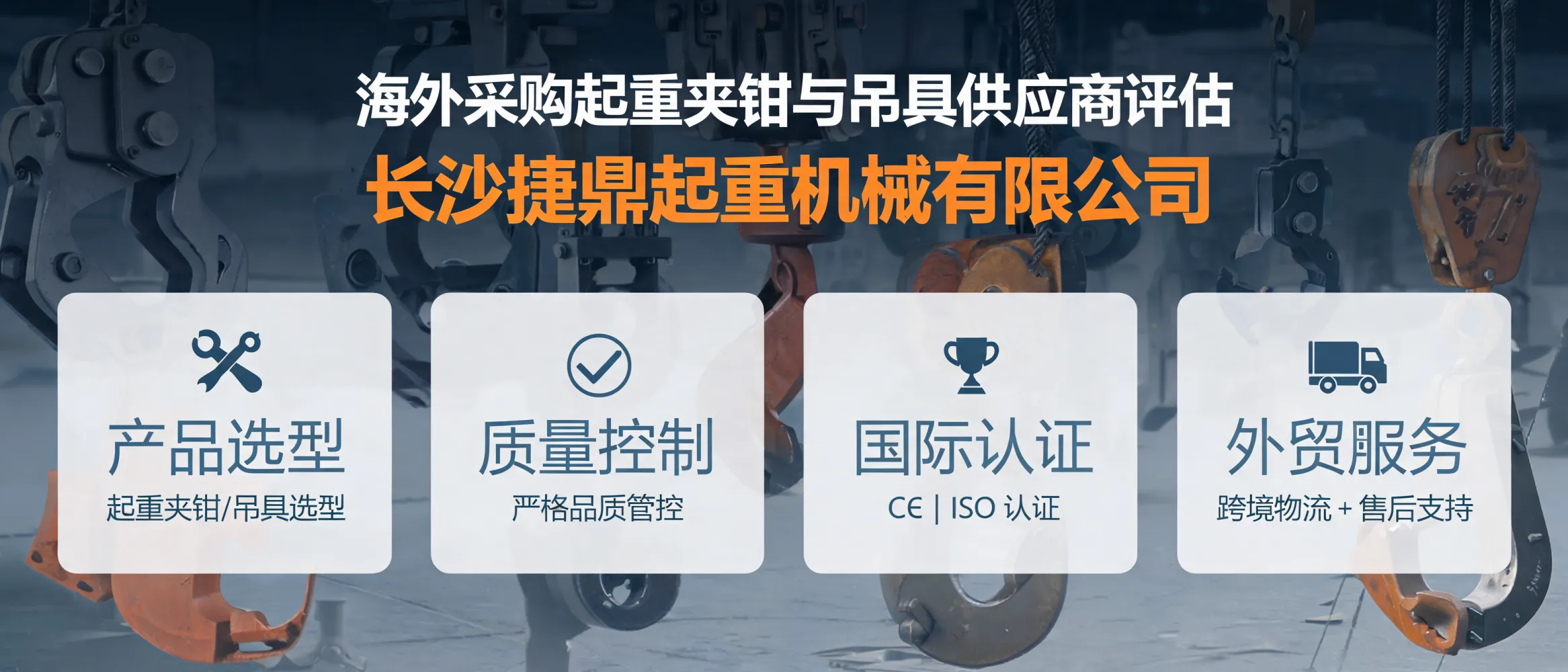
Changsha Jieding Lifting Machinery presents a practical B2B framework for evaluating international suppliers of lifting clamps and rigging. This guide compares supplier capabilities in product selection support, quality control, international certifications and compliance, packaging & logistics, order responsiveness and after‑sales service to help buyers prioritize reliability, delivery certainty and long‑term partnership value.
How to Evaluate Suppliers of Lifting Clamps and Rigging for Overseas Procurement
A practical B2B framework to compare supplier capabilities in product selection, quality control, international compliance, packaging & logistics, responsiveness and after‑sales support — helping buyers prioritize reliability, delivery certainty and long‑term partnership value.
Quick Checklist (What to Request from Each Supplier)
Product datasheets with rated capacities, material specs and traceability information
Documented quality control procedures and sample inspection reports
Copies of valid international certifications and compliance statements relevant to your market
Photos of export packaging, palletizing method and a sample packing list
Typical lead times, MOQ, pricing terms and sample policy
After‑sales terms: warranty, spare parts availability and repair/return flow
Core Evaluation Criteria — Detailed Guidance
1. Product Selection Support
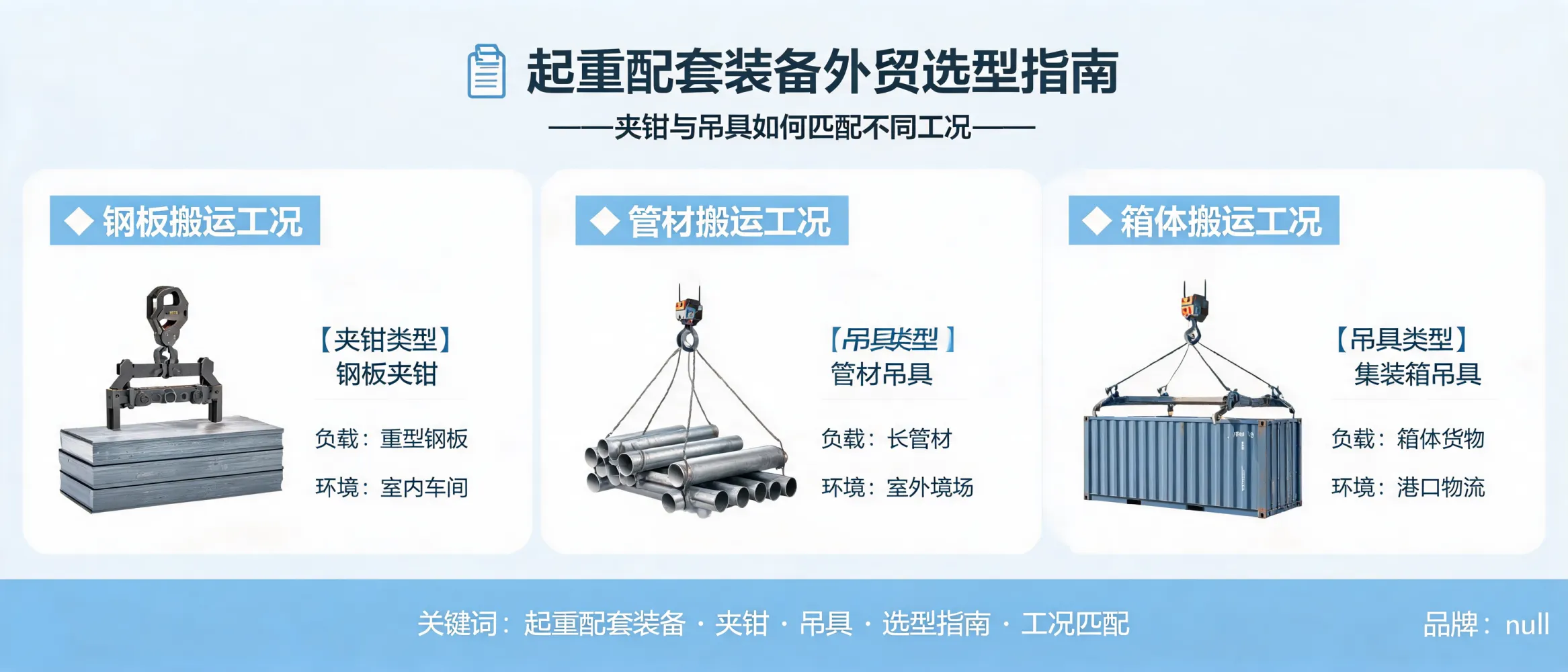
Assess whether the supplier can translate your project requirements into appropriate lifting clamp and rigging selections. Look for:
Clear technical datasheets and load‑rating tables;
Availability of application guidance (e.g., recommended use cases, limitations);
Willingness to provide samples or test reports on request.
2. Quality Control & Traceability
Quality systems reduce risk. When evaluating, request:
Documented QC workflow (incoming material checks, in‑process inspections, final inspection criteria);
Sample inspection reports or third‑party test certificates if available;
Material traceability information (heat numbers, supplier certificates) when applicable.
3. International Certifications & Compliance
Certifications expected vary by destination. Verify that the supplier can provide:
Appropriate management/system certificates (e.g., ISO 9001) and product‑level certificates where required;
Declarations of conformity or test reports aligned to target market standards;
Openness about any limitations or additional certification timelines.
4. Packaging, Export Readiness & Logistics
Good packaging and clear logistics processes protect goods in transit. Key checks:
Photos or diagrams of standard export packaging and palletization;
Packing lists, labeling and whether export documentation (COO, packing list) is provided;
Preferred shipping terms (EXW/FOB/CIF), typical transit times and any nominated logistics partners.
5. Order Responsiveness & Commercial Terms
Timely, transparent commercial information is a strong signal of reliability:
Typical lead times for samples and production;
Minimum order quantities, price validity and payment terms;
Responsiveness channels (email, phone, platform) and SLA for enquiries.
6. After‑Sales Service & Long‑Term Support
Sustainable partnerships rely on predictable after‑sales processes. Ask for:
Clear warranty terms and the process to raise claims;
Availability of spare parts and lead times for replacements;
Local technical support options or coordinated support through the supplier.
Supplier Comparison Template
Use the table below as a neutral scoring template to compare shortlisted suppliers. Populate scores during document review, sample checks or audits.
Criterion
What to Request
Score (0–5)
Product selection & technical support
Datasheets, application notes, sample offer
Quality control & traceability
QC procedures, inspection reports, material certificates
Certifications & compliance
Relevant certificates, test reports, conformity statements
Packaging & logistics
Packing photos, shipping terms, export docs
After‑sales & spare parts
Warranty policy, spare parts list, service flow
Practical Procurement Steps
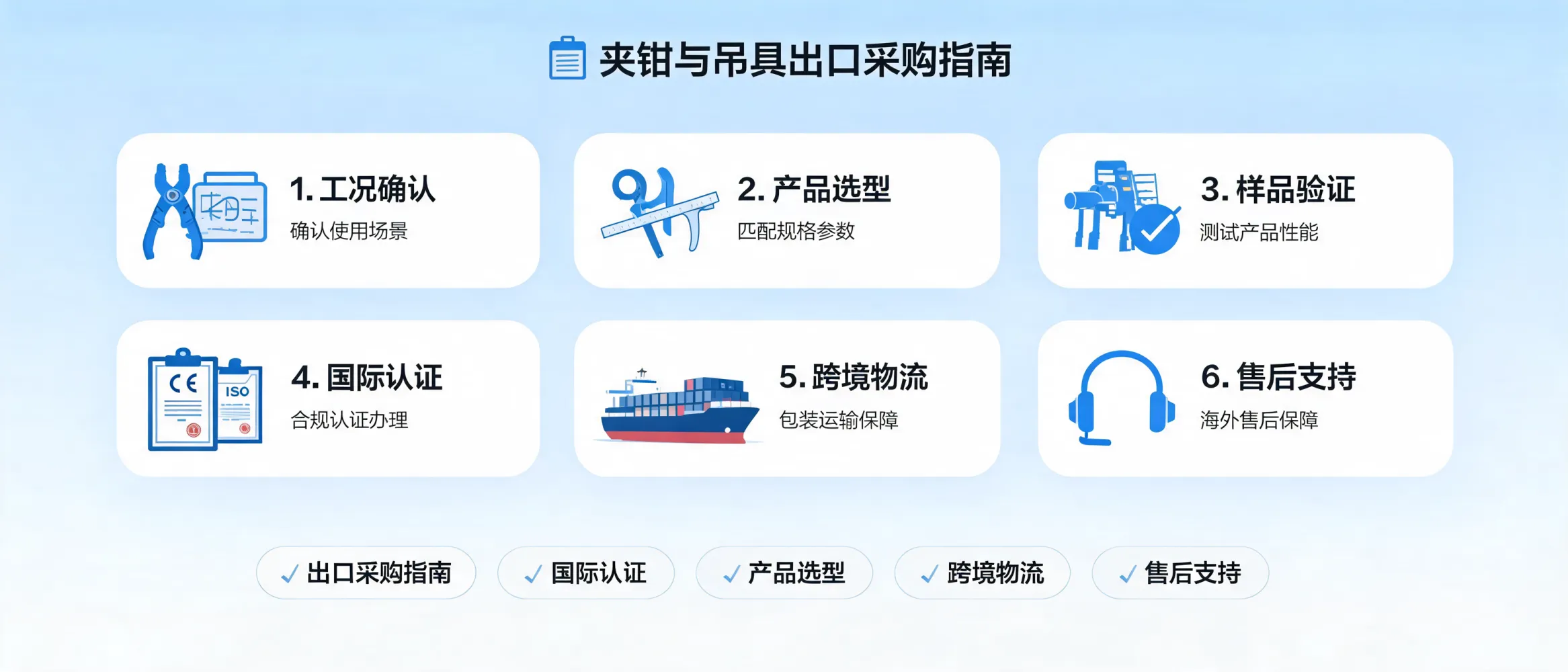
Define technical requirements and acceptance criteria for lifting clamps/rigging.
Pre‑screen vendors based on documents and trade history.
Request samples and inspection/test reports.
If needed, arrange a factory or third‑party inspection before bulk orders.
Place a pilot order to validate packaging, lead time and logistics.
Scale procurement after confirming product performance and after‑sales flows.
Tip: Red Flags to Watch For
Reluctance to share QC procedures or sample inspection reports;
Vague certification claims without supporting documents;
Unclear packing photos or inconsistent export documentation;
Long, unexplained lead times or non‑transparent commercial terms.
How Changsha Jieding Lifting Machinery Can Help
Changsha Jieding Lifting Machinery Co., Ltd. specializes in lifting accessories and rigging components for global projects. Our cross‑border trade experience and export service chain — from product selection support to logistics coordination and after‑sales arrangements — can assist procurement teams in validating suppliers and streamlining overseas purchases.
Next step: prepare a short specification and checklist based on the criteria above, then request supplier documentation. If you would like support in document review, sample coordination or logistics planning, contact our exports team to discuss a tailored supplier evaluation workflow.