Safety Guide for Using Clamps and Lifting Equipment
08 08,2026
Changsha Jieding Lifting Machinery Co., Ltd.
Operating Instructions
Changsha Jieding’s guide to safe clamp and lifting equipment use, covering pre-use inspection, installation, load confirmation, lifting operations, fault handling, and routine maintenance.
Safe use of clamps and lifting equipment depends on correct equipment selection, careful inspection, proper connection, controlled operation, and regular maintenance. This guide from Changsha Jieding Lifting Machinery Co., Ltd. provides practical reference points for overseas customers, equipment operators, supervisors, and maintenance personnel.
Important safety notice:
This guide is a general reference. Always follow the applicable product manual, rated capacity information, site procedures, local regulations, and instructions from qualified professionals. Only trained and authorized personnel should operate lifting equipment.
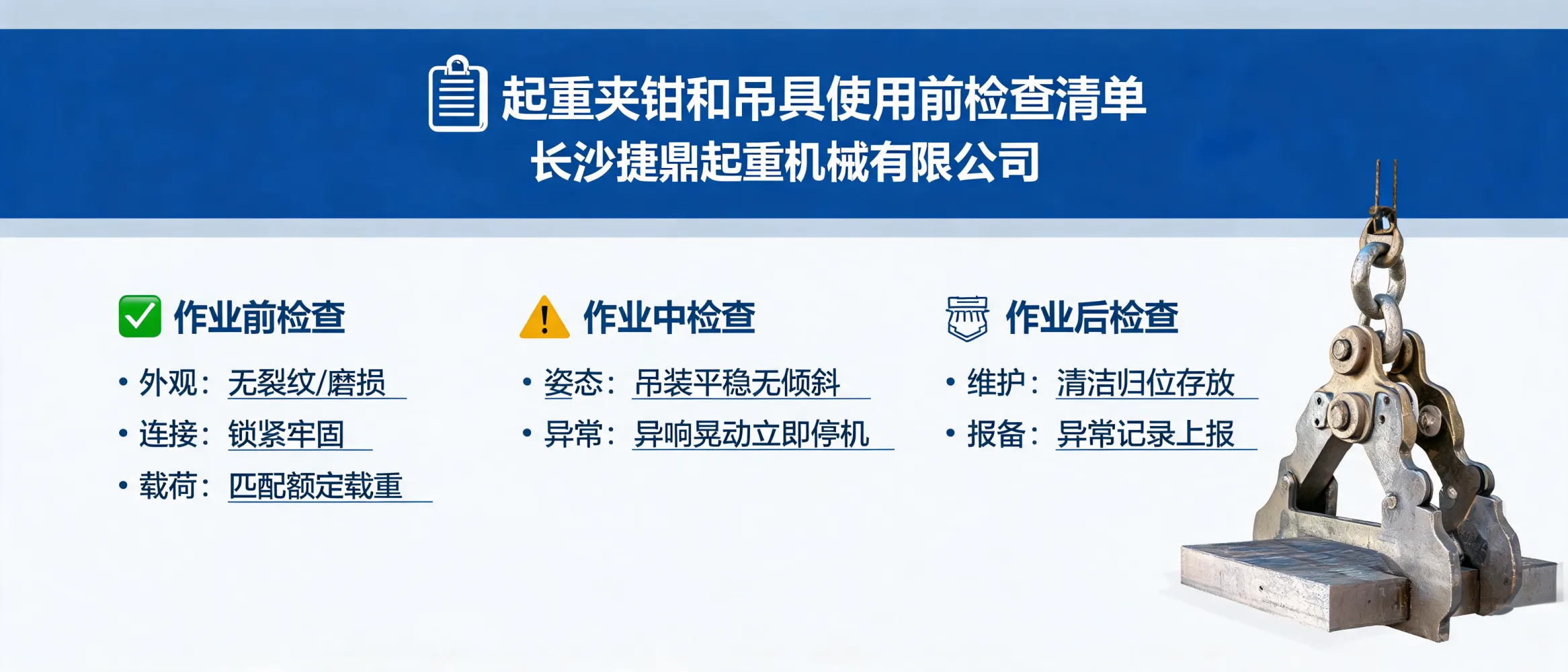
1. Pre-Use Inspection
A lifting clamp or related lifting device should be inspected before each use. Do not operate equipment when its condition, identification, or suitability is uncertain.
- Check the body, jaws, pins, bolts, welds, handles, safety locks, chains, and other visible components for cracks, deformation, excessive wear, corrosion, or looseness.
- Confirm that the rated capacity, identification markings, and inspection information are legible and consistent with the planned lifting task.
- Inspect contact surfaces and gripping elements for contamination, damage, or conditions that could reduce holding force.
- Examine slings, shackles, hooks, connecting links, and other accessories for damage or incompatibility.
- Remove defective equipment from service and report it for evaluation by qualified personnel. Do not use makeshift repairs or unapproved replacement parts.
2. Installation and Connection
Correct installation helps ensure that the clamp and lifting equipment remain properly engaged throughout the operation.
Select the right contact point
Position the clamp only on a load surface suitable for the equipment design. Ensure the contact area is clean, stable, and free from coatings, debris, or conditions that may affect grip.
Verify the connection
Connect hooks, slings, shackles, and other accessories according to the equipment instructions. Confirm that connecting components are seated correctly and cannot disengage during lifting.
Check alignment
Keep the lifting point, load, and lifting line aligned as required by the equipment design. Avoid side loading, twisting, or positions that place unintended force on the clamp.
3. Load Confirmation Before Lifting
Before starting the lifting operation, the operator and supervisor should confirm that the planned load is within the equipment’s permitted operating conditions.
- Identify the load: Confirm the load type, approximate weight, dimensions, center of gravity, and surface condition.
- Check capacity: Compare the load and lifting arrangement with the rated capacity and limitations stated by the manufacturer.
- Assess stability: Make sure the load can remain stable and that the selected clamp or lifting device is suitable for its shape and material.
- Control the lifting area: Remove unnecessary obstacles and establish an exclusion zone so that people do not stand beneath or close to a suspended load.
- Confirm communication: Agree on signals, responsibilities, and emergency actions before the lift begins.
4. Safe Lifting Practices
Lifting should be controlled, steady, and carried out by trained personnel. The operator should stop the operation whenever the load or equipment behaves unexpectedly.
- Lift gradually and avoid sudden acceleration, shock loading, swinging, dragging, or abrupt changes in direction.
- Keep all personnel clear of the suspended load and maintain a safe distance from pinch points and moving components.
- Do not leave a suspended load unattended and do not use lifting equipment to transport people unless it is specifically designed and approved for that purpose.
- Monitor the clamp, connection points, load balance, and lifting line throughout the operation.
- Consider site conditions such as limited visibility, wind, wet or slippery surfaces, temperature, and nearby equipment.
- Place the load on a stable supporting surface before releasing the clamp or disconnecting accessories.
5. Handling Abnormal Situations
If abnormal movement, slipping, unusual noise, deformation, or other warning signs appear, stop the operation immediately when it is safe to do so.
- Do not stand under, reach beneath, or attempt to stabilize a suspended load by hand.
- Lower or secure the load using a controlled procedure and keep unauthorized personnel away from the area.
- Stop using the equipment if the clamp loses grip, the connection becomes misaligned, or any component shows suspected damage.
- Tag and isolate questionable equipment until it has been inspected by a competent person.
- Record the incident or defect and review the lifting method before resuming work.
6. Routine Maintenance and Storage
Regular care supports reliable operation and helps identify issues before the next lifting task.
| Maintenance focus |
Recommended practice |
| Cleaning |
Remove dirt, moisture, and residues that may affect moving parts or gripping surfaces. |
| Lubrication |
Lubricate applicable parts according to the manufacturer’s instructions and avoid contaminating contact surfaces. |
| Inspection records |
Maintain inspection, repair, and service records in line with site procedures and applicable requirements. |
| Storage |
Store equipment in a clean, dry, protected location where it will not be struck, overloaded, exposed to unnecessary corrosion, or damaged by other materials. |
A Practical Safety Routine
Inspect before use. Confirm the equipment and accessories are in suitable condition.
Connect correctly. Follow the equipment instructions and verify alignment.
Confirm the load. Check capacity, stability, surface condition, and the lifting environment.
Lift under control. Use clear communication and keep people away from suspended loads.
Maintain and report. Clean, inspect, store, and remove defective equipment from service.
For product selection, operating conditions, documentation, or maintenance questions, overseas customers can contact Changsha Jieding for professional support related to clamps and lifting equipment.