

Practical guidance for overseas contractors, equipment distributors, and industrial buyers
Selecting lifting equipment for an engineering project requires more than comparing product prices. The lifting method, load characteristics, operating environment, equipment compatibility, safety controls, certification requirements, and supplier support should be assessed together. This guide from Changsha Jieding Lifting Machinery Co., Ltd. provides a structured approach to evaluating lifting clamps, container spreaders, and related lifting equipment for international procurement.
The correct lifting solution depends on the relationship between the load, the lifting machinery, and the working conditions. Before requesting a quotation, buyers should define the following points:
| Evaluation area | Questions for procurement review |
|---|---|
| Lifting capacity | Does the rated capacity match the intended load and the project’s required safety margin? Are the load conditions clearly defined? |
| Load engagement | Can the clamp, hook, or locking mechanism engage the load correctly and maintain a secure connection throughout the lifting cycle? |
| Operating efficiency | Will adjustment, locking, positioning, and release operations support the required handling frequency? |
| Safety and visibility | Are locking status, position, and operating steps easy for operators to verify? Are safeguards provided against incorrect operation? |
| Supplier support | Can the supplier provide selection guidance, technical documentation, installation or operating training, and responsive after-sales support? |
For projects involving standard container lifting, a container spreader should be evaluated according to container size compatibility, locking performance, positioning control, crane interface, and operating frequency.
Changsha Jieding’s container spreader is designed for ports, logistics parks, and construction sites. Its automatic rotary locking system and position detection function support accurate engagement and help reduce the risk of unintended disengagement caused by operating errors. The telescopic structure supports rapid switching between 20-foot and 40-foot containers, helping users adapt the equipment to common container-handling requirements.
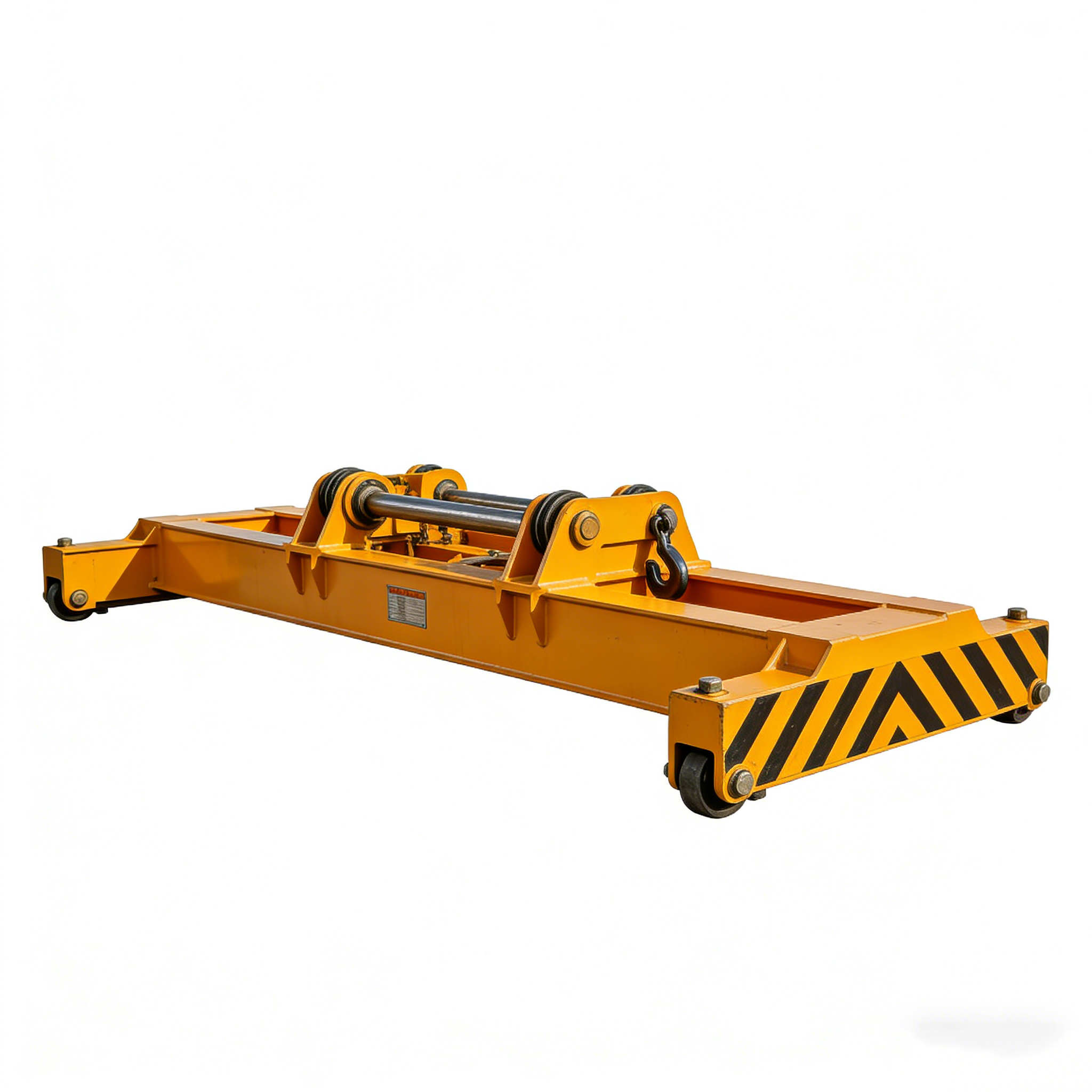
Automatic rotary locking combined with position sensing helps operators verify engagement and supports safer container lifting procedures.
A telescopic design enables quick adjustment between two commonly used container lengths, reducing unnecessary changeover time.
Finite element analysis is used to optimize the structure, supporting a balance between lifting strength and equipment weight for frequent heavy-duty use.
The product is supported by an ISO 9001-certified production process and Changsha Jieding’s experience serving customers in Southeast Asia, the Middle East, Europe, and Africa.
Different lifting accessories solve different handling problems. Procurement decisions should begin with the load and handling task rather than with a preferred product category.
Product selection should be completed together with a review of drawings, operating instructions, inspection requirements, packing, shipping arrangements, installation needs, and operator training. Rated capacity, applicable standards, and site conditions must be confirmed for the specific project rather than assumed from a general product description.
As a B2B supplier of lifting accessories, Changsha Jieding Lifting Machinery Co., Ltd. supports buyers through the stages of product selection, technical communication, international compliance review, logistics coordination, and after-sales service. For container spreaders and other lifting equipment, the company provides selection guidance, installation training, field-oriented operating support, and after-sales response.
Overseas contractors, equipment distributors, and industrial buyers can provide their load information, container sizes, crane details, operating environment, destination market, and expected handling frequency for a more appropriate lifting equipment evaluation.


